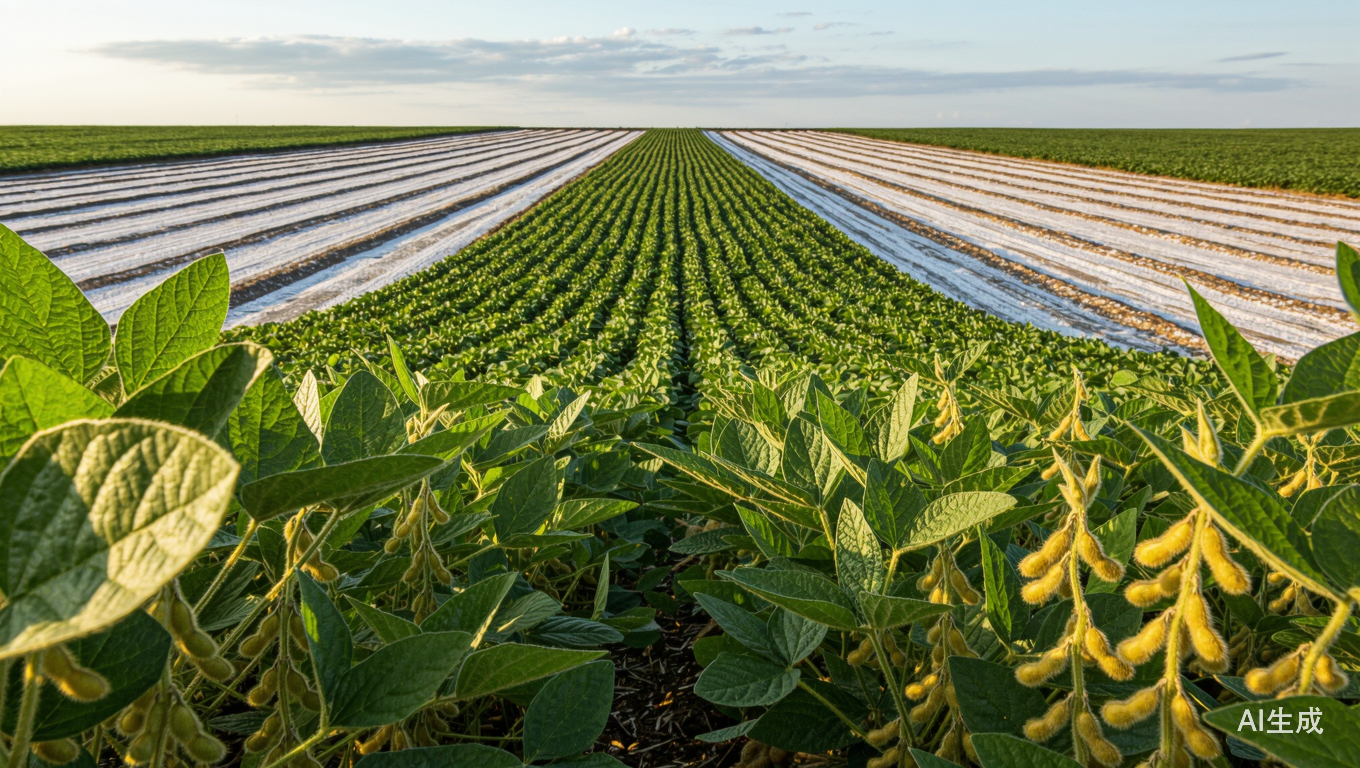
This made us incredibly happy.
Tian Zhixi, Researcher at the Institute of Genetics and Developmental Biology, Chinese Academy of Sciences
Volume 108 of Gezhi Lundao, December 23, 2023, Beijing
Hello everyone, I'm Tian Zhixi, from the Institute of Genetics and Developmental Biology, Chinese Academy of Sciences. I'm delighted to have the opportunity to share with you the story of "10 Years of Research on Glycine max" from our laboratory.
When it comes to soybeans, I think everyone is familiar with them. However, it's unclear whether everyone knows that the total amount of soybeans consumed in China each year is approximately 120 million tons, with each person consuming an average of 90 kilograms, or 180 jin, per year.
Isn't this number surprising? How can we consume so many soybeans? When it comes to soybeans, we usually think of common soy products like tofu, soy milk, soy oil, soy sauce, edamame, and dried tofu. Can it be that just these soy products lead to each person consuming 180 pounds of soybeans per year?
In reality, what we can see is just the tip of the iceberg - there is also a significant amount of soybean consumption that is invisible and hidden from view. Over the past few decades, our standard of living has improved significantly, leading to a substantial increase in the consumption of meat, eggs, and dairy products. According to incomplete statistics, the total output of meat, eggs, dairy products, and aquatic products has increased by around 10 to 20 times, or even several dozen times, over the past 50 years. These livestock and aquatic products require large amounts of protein as feed, and where does this protein come from? It mainly comes from soybeans. This is why we are able to consume such large quantities of soybeans.
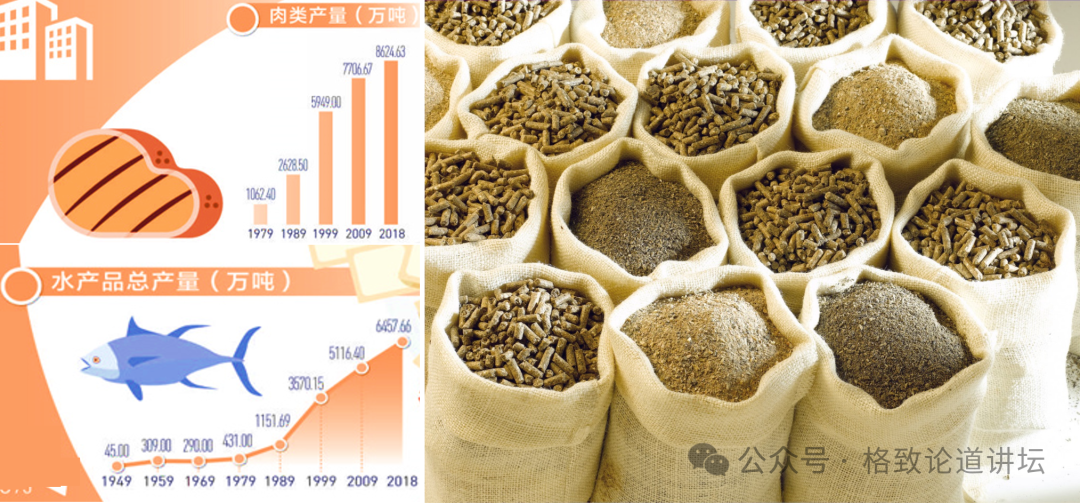
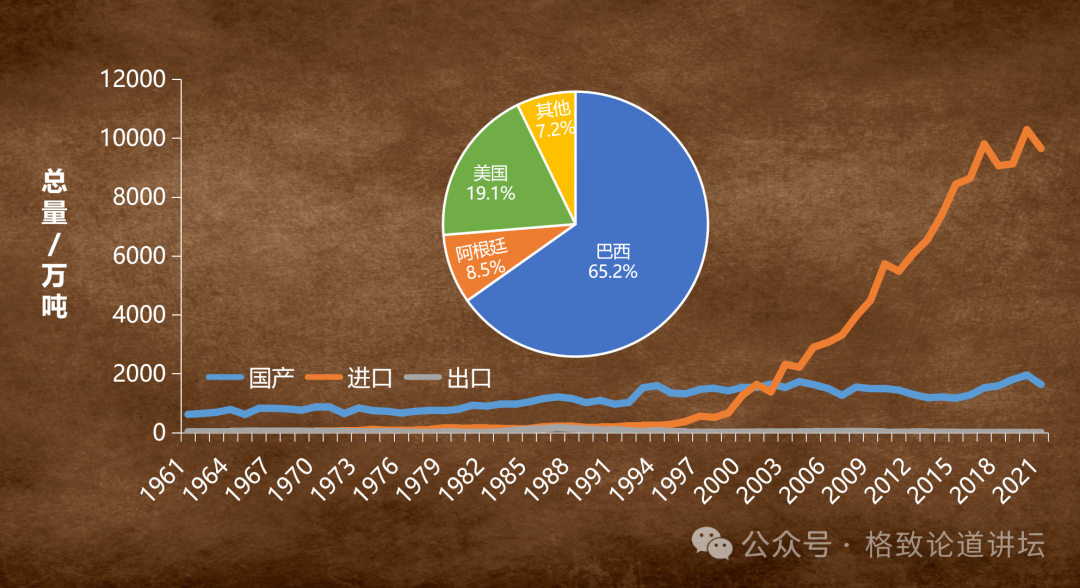
So are the 120 million tons of soybeans we consume domestically produced? Actually, not even close. Currently, China's domestic soybean production is only around 20 million tons, with the remaining 100 million tons mainly coming from imports. In other words, more than 80% of the soybeans we consume rely on imports, which seriously affects the country's food security.
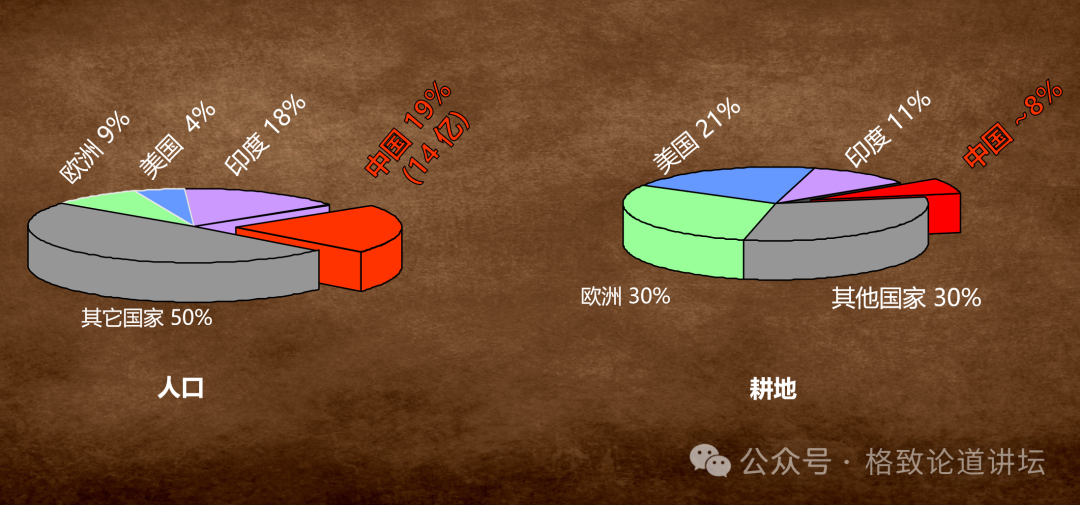
Why import so many soybeans then? A fundamental reason lies in the limited arable land resources in our country. China's population accounts for 19% of the world's population, but its arable land only accounts for around 8% of the world's total. This necessitates importing grain to make up for the shortfall in our arable land, as the grain produced by our current arable land cannot meet the consumption demands of our people.
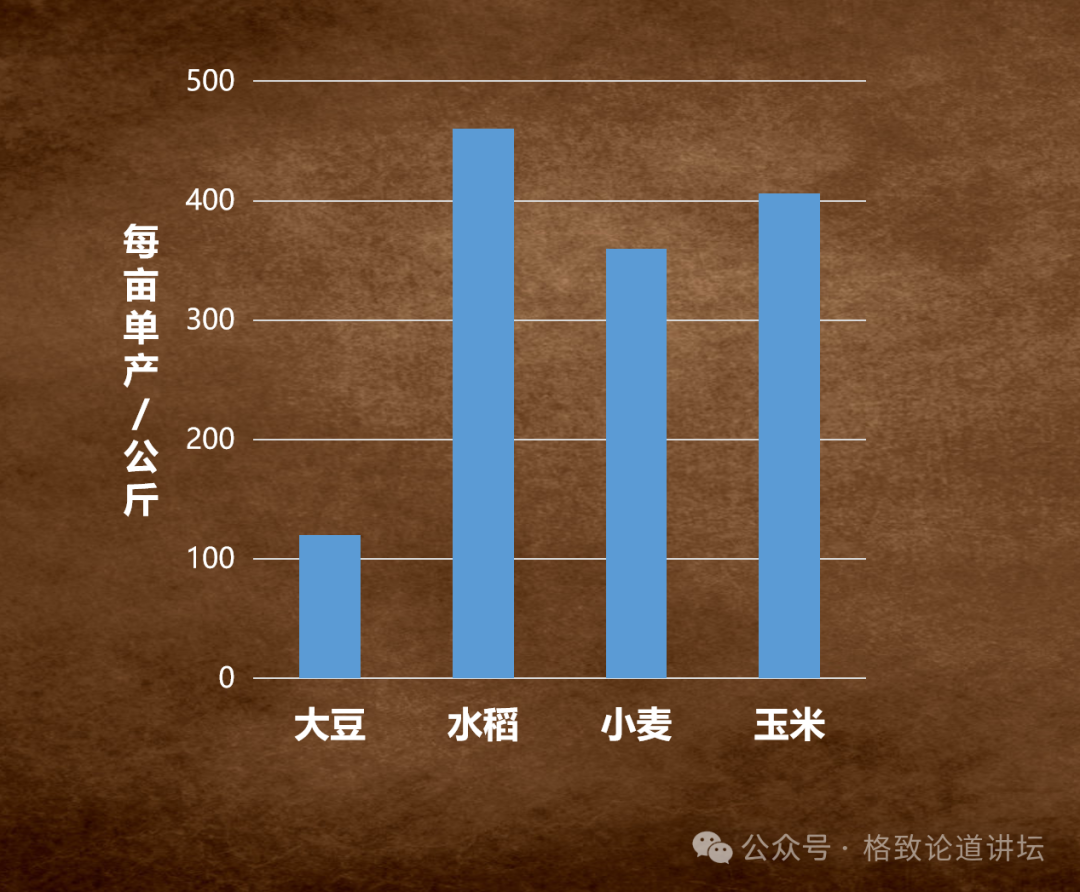
You might again wonder: why do we import soybeans rather than other grains? The answer comes back to the soybean itself—its per-unit yield is simply far too low compared with other staple crops.
As can be seen from the chart, the current yield per unit of soybeans is only about one-third to one-fourth of that of corn, rice, and wheat. If we are to achieve complete self-sufficiency in soybeans, we would need to use more arable land to plant soybeans, which would mean importing more rice, wheat, or corn, potentially having a greater impact on our food security. Therefore, importing soybeans is currently an unavoidable strategic choice for us.
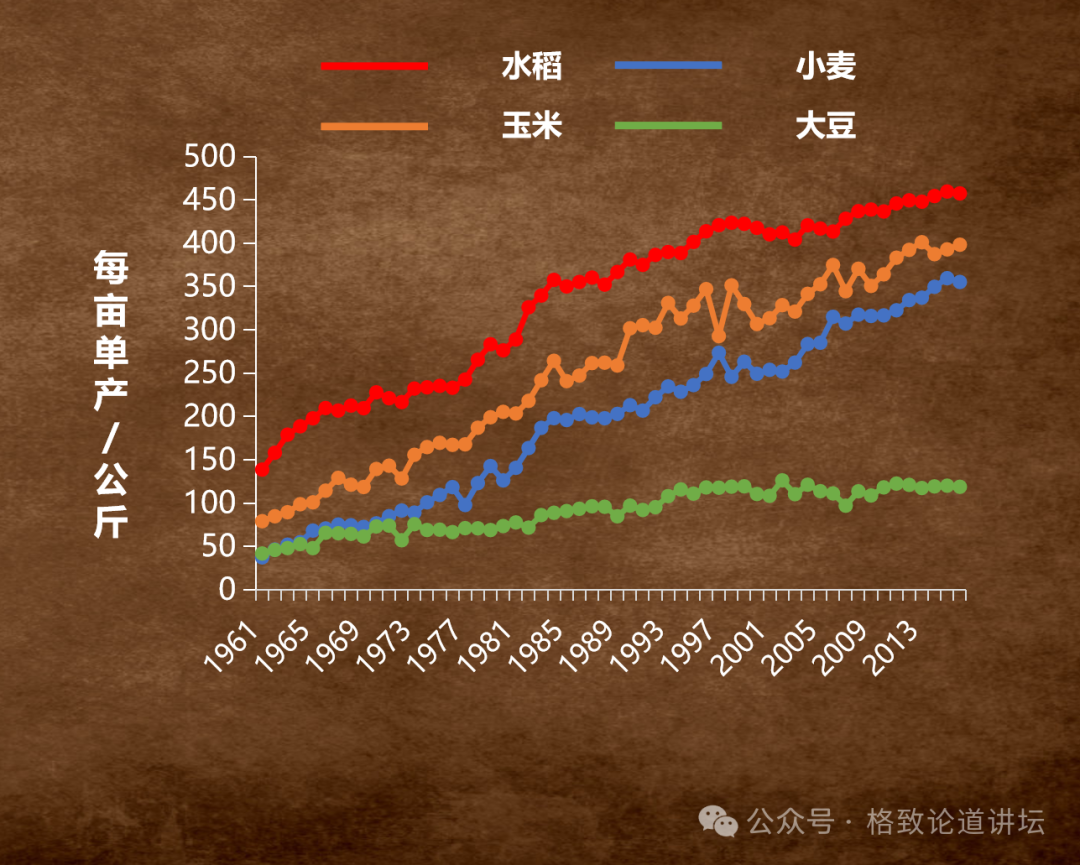
The issue of low soybean yields is not a problem that has existed since ancient times. The gap between soybeans and other crops like rice, wheat, and corn has not always been so large.
Looking back at the changes in yields of rice, wheat, corn, and soybeans over the past 60 years, it can be seen that the yields of corn, rice, and wheat have increased significantly, while the yield of soybeans has remained relatively stable at a low level, with no substantial improvement, so we need to achieve a significant increase in soybean yields through breeding.
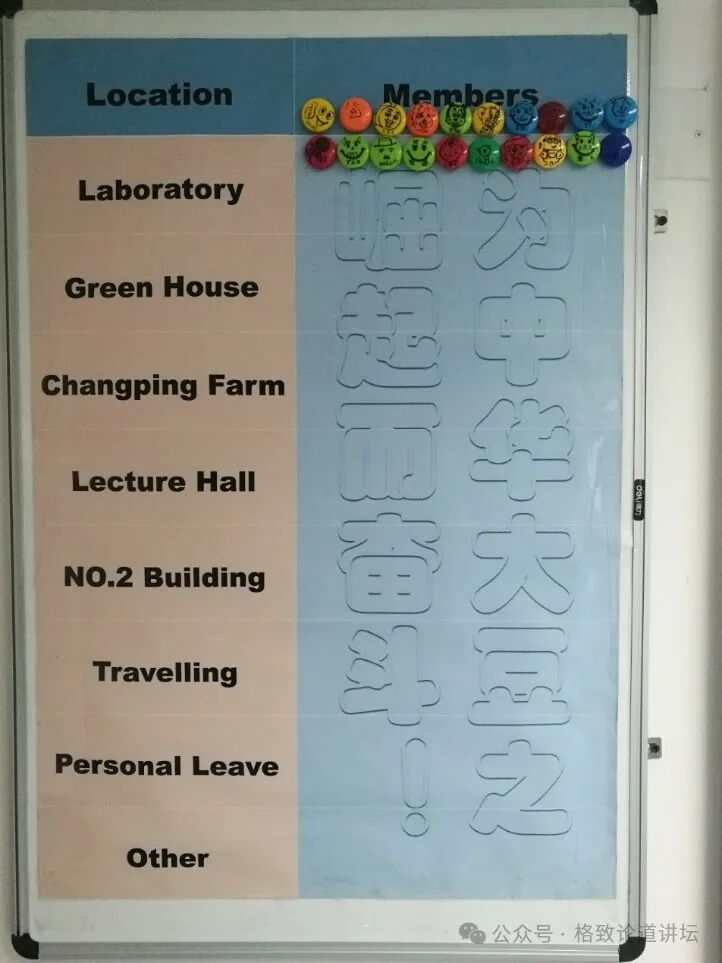
After returning to China from abroad as a postdoctoral researcher in 2011, I established my own laboratory and made increasing soybean yields one of the lab's primary goals. I also came up with a motto for our laboratory, "Striving for the Rise of Chinese Soybeans," to motivate every member of the lab.
Over the past decade or so, we have received a great deal of help and support from our teachers, friends, and classmates. This is a calligraphy piece written by Teacher Kang, with the content being two lines from Chairman Mao's "Seven Laws - Arrival at Shaoshan": "Delighted to see the thousand layers of waves of grain, heroes emerge everywhere under the evening smoke."
I particularly like these two lines of poetry because the first character "喜" happens to be the last character of my name, and "菽" means soybean. The two lines depict a farmer brother returning from farming in the fields and seeing a scene of abundance, feeling very happy and joyful inside, which is also very much in line with my own work. This is a kind of encouragement from Secretary Kang to me, and I also hope that in our future work, we can truly make some contributions to the soybean industry.
Doubao Teaches Users How to Plant Soybeans
Completion rate: 10%
We are using a method called design breeding, which aims to combine basic scientific research with current breeding practices to truly move towards a faster path.
Firstly, let's explain what breeding means - it's actually the process of cultivating a new crop variety. When it comes to variety breeding, we often hope to achieve an optimal state, which is to combine the best traits of high yield, quality, and stress resistance into one material, resulting in a super variety.
To obtain this super species, we need to know which genes control these traits and how to make it high-yielding and of high quality.
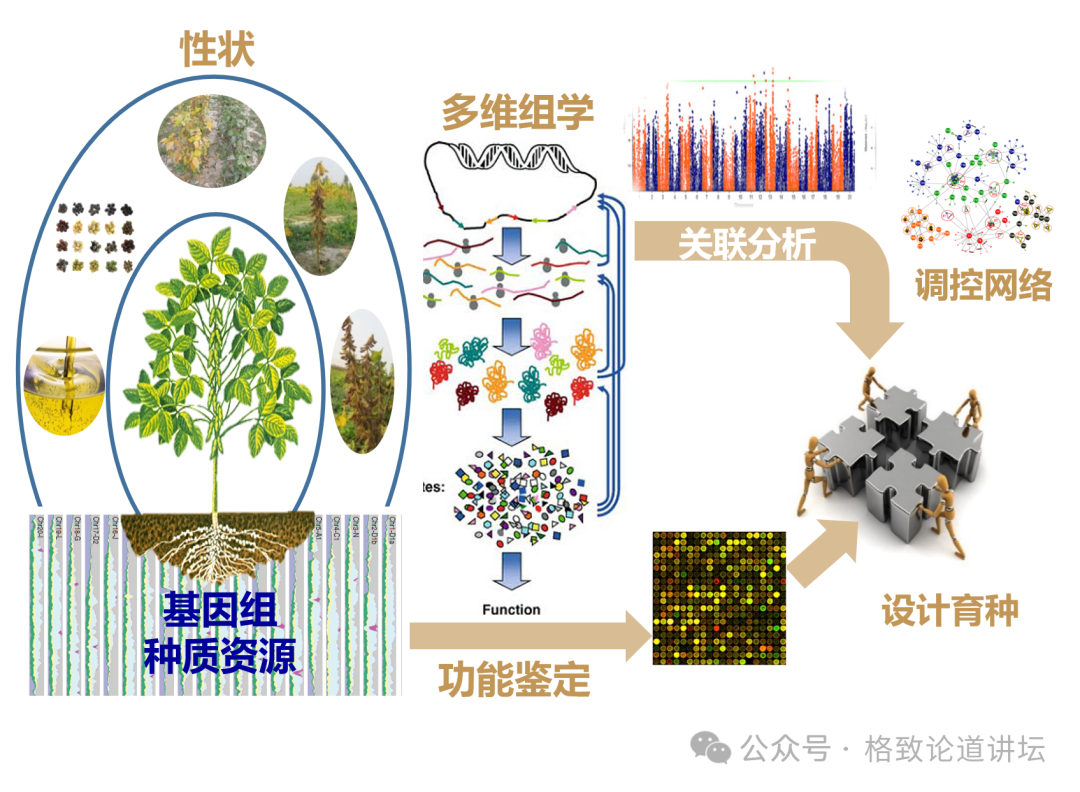
To obtain these genes, we adopted a strategy of association analysis. We first select a large amount of soybean materials to evaluate which materials have better resistance, which have better quality, and which have higher yields. At the same time, we also study their genetic information, researching how their genes vary across different materials.
Then, we combine the changes in the characteristics of these materials with the genetic changes, making them interrelated. This allows us to determine which genetic locus change leads to high yield and which genetic locus change leads to high quality. In this way, we can clearly understand how each characteristic is regulated. Finally, by aggregating the genes corresponding to the desired characteristics into one variety, we achieve design breeding.
In summary, designing breeding can be broken down into three basic steps. The first step is to screen and evaluate germplasm resources, as well as analyze their genomes. The second step is to use this information to identify the gene networks that control specific traits. The third step is to aggregate this knowledge to design and cultivate new varieties.
Specifically, the first step is to collect materials. Soybeans are actually a crop native to China, first domesticated in China and then spread to the rest of the world. As the origin country of soybeans, China has rich germplasm resources.
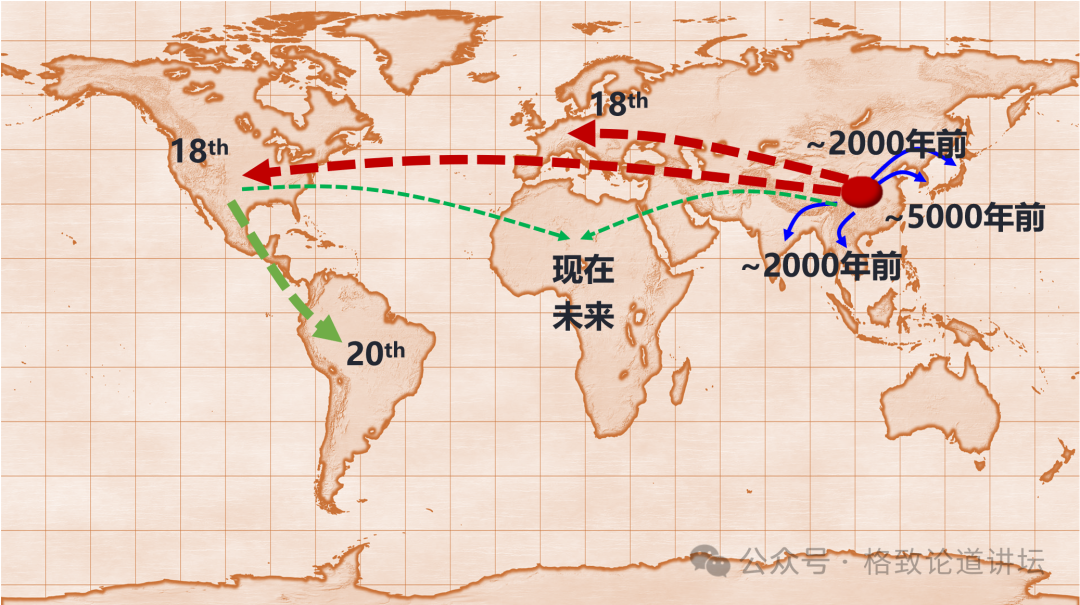
China's soybeans going global
After returning to China, the first thing I did was to collect these germplasm resources. In this process, I was fortunate to have received support from many teachers, and by 2011, I had collected around 100 sets of materials.
This is a photo of my first year of farming. As you can see, I was full of hope and excitement as I planted the materials. After planting them in the ground, I waited for the harvest.
But what about the results? As can be seen from this graph, it is clearly divided into two parts, with the top part growing lushly and the bottom part growing sparsely, as if many materials had not grown out. Why is there such a difference?
The land above is cultivated by an elderly researcher from our institute who specializes in soybeans, and his crop is doing relatively well. The land below is mine, and at the time, I had no idea how to grow soybeans.
This has also become a joke in our company. Someone joked that I don't need to look or ask, if it looks bad, it must be Teacher Tian's field.
What could I do, I had to go learn farming, learn from the old gentleman, and slowly gained experience in farming. Of course, in the process, we also developed and collected a lot of materials.
After roughly seven or eight years of effort, we have now collected 3,000 materials and created 50,000 materials on our own. Just arranging these materials in rows would require 100 mu of land. What we have planted now looks very beautiful, with everything growing lush and green. The bare patches you see are not because the planting was done poorly, but because we are conducting screenings and working on saline-alkaline land, which I will discuss later.
This is a group photo of us in the fields. Everyone can see that the sky is a brilliant blue. Earlier, the sky in the photo was gray and gloomy, which also reflects the change in my mood.
Applying Mathematical Concepts to Genome Research
Completion rate: 30%
With these genetic resources, the next step is to conduct genomic information analysis. To do genomic information analysis, there is a major prerequisite, which is that we must have a standard. For example, if we want to study humans now, we must first have a human genome to use as a reference in order to carry out the research.
Soybeans are similar. Initially, there was a soybean genome developed by the US, but we found it had significant defects and was not up to standard. Building on this, and thanks to advances in technology, we sequenced a material called Zhonghuang 13 from our country and produced a very good genome.
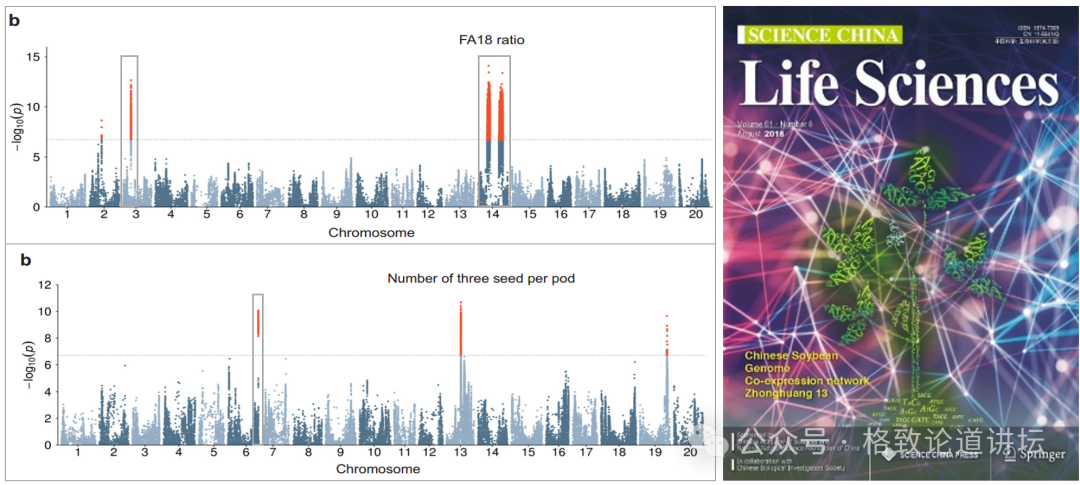
Left: The first soybean genome, Wm82
Right: Constructing 13 High-Quality Reference Genomes for Zhonghua 13
Researchers including Shen published studies in Science China Life Sciences in 2018 and 2019.
However, in this process, we found that having just one genome is not enough. Why is that?
Let me give an example. For instance, when studying human traits, whether it's about height, weight, or skin color, to research why these traits are produced, if we only sequence my own genome without sequencing others, how can we make comparisons? Especially for those segments that are present in others' genomes but not in mine, it's impossible to make comparisons.
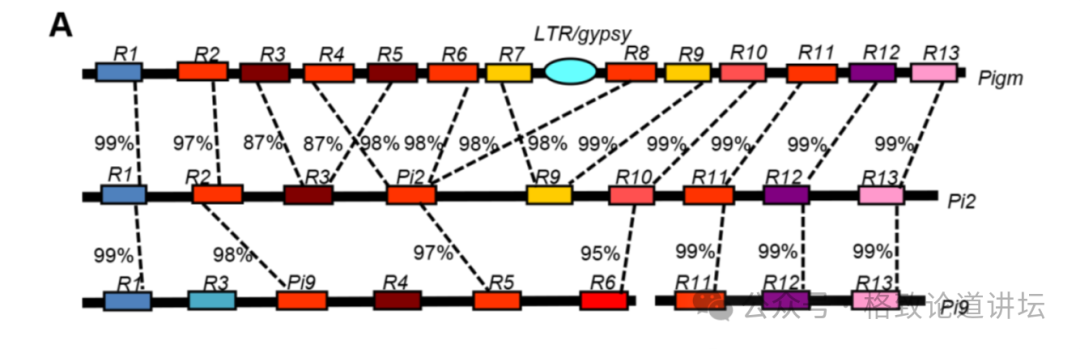
If the third line in the graph represents my genome, and everyone else has the yellow sequence in the middle but I don't, then that sequence can't be compared. If this sequence controls height, then we won't be able to determine what the gene that controls height looks like.
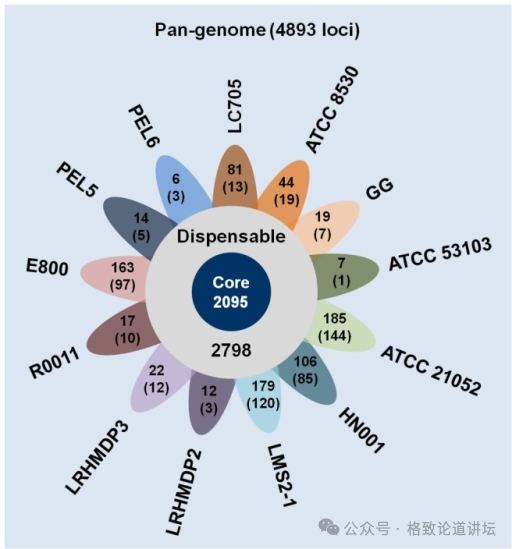
Therefore, more genomes are needed, and some representative individuals need to be selected from the population for sequencing. Afterwards, comparison can be made to determine which genes are common to all people, which are occasionally found in a few people, and which are unique to a particular individual, making it clearer. This is also the concept of "pan-genome" that was later proposed. In soybeans, we have successfully achieved a pan-genome.
We've also made a breakthrough by applying graph theory from mathematics, transforming the genome from a one-dimensional to a two-dimensional concept. What does it mean to go from one-dimensional to two-dimensional? For those who have studied biology, you'll know that traditional genomes are linear sequences of A, T, C, and G. However, when you try to assemble all the genomes together, many problems arise.
For instance, if we have four genomic sequences ABCD, but when we assemble them together, as shown in the middle diagram, the sequences obtained using A as the starting point and D as the starting point are different.
So how can this be resolved? We thought of a very good mathematical theory, which is graph theory. Graph theory involves converting one-dimensional linear structures into two-dimensional network structures, and this network can effectively connect the position of each node and the differences in sequences, as shown in the diagram on the right.
However, there are still significant challenges between mathematical theory and practice, and we ultimately achieved a graph-based pan-genome in soybeans, which has played a great driving role in subsequent research.
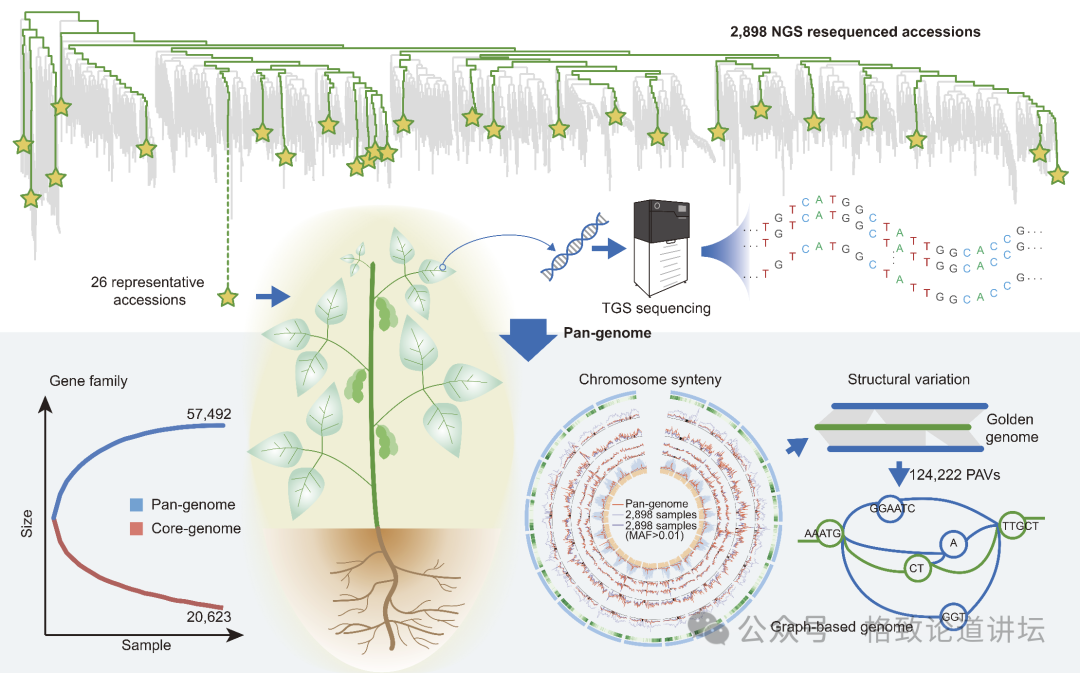
Liu et al published a paper in Cell in 2020.
From Good Genes to Good Breeds
Completion rate: 50%
We have collected the necessary materials and completed the genome, and next we will be studying its traits. Specifically, we will be researching what determines its high-yield, high-quality, and stress-resistance properties.
First, we all know that soybeans are oilseed crops with high oil content, capable of producing and extracting oil. But have soybeans always been high-oil crops for thousands of years? Actually, no.
Soybeans were domesticated in China about 5,000 years ago. Before domestication, they were wild soybeans, like the small black seeds on the left in the picture, which are high-protein plants. Our analysis found that the high oil content characteristic was formed through the long-term selection by our ancestors of genes that control oil content.
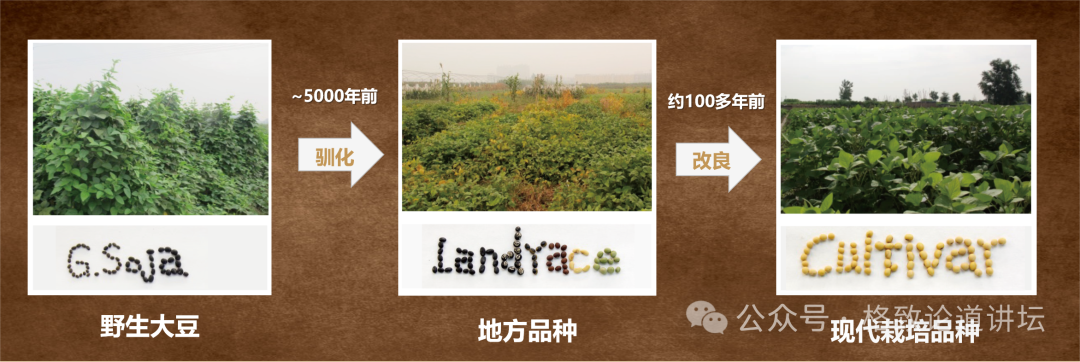
Zhou et al, Nature Biotechnology, 2015
Based on this idea, we have found many other genes, including those that control yield, flowering, and stress resistance.
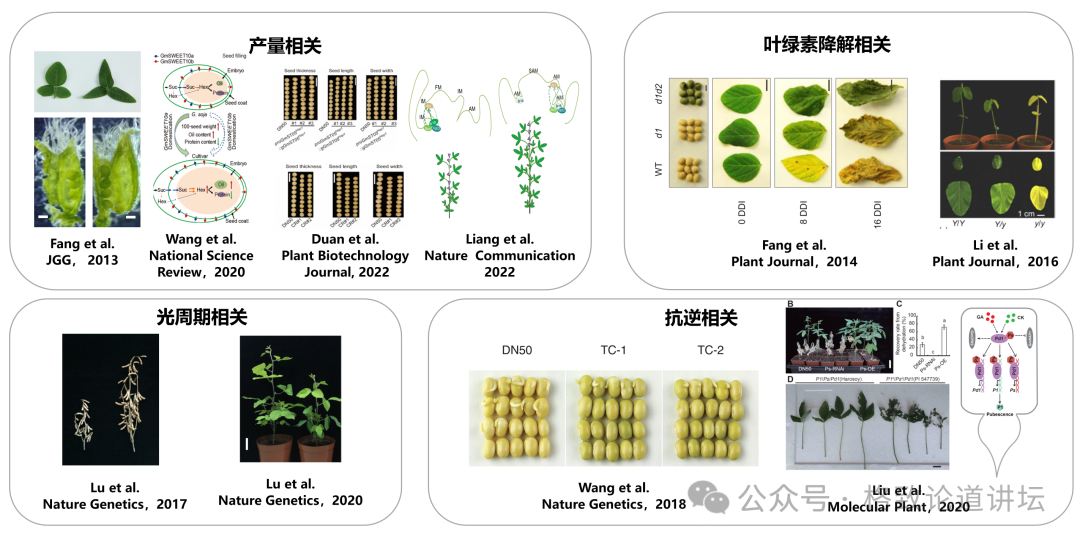
Identifying the genes that control key traits doesn't necessarily mean that gathering good genes that control different traits will result in a good variety. In reality, this approach is not entirely feasible and poses many challenges. This is because a gene that is beneficial for one trait may be detrimental to another.
Let me give a very simple example. If you look closely, you'll notice that when eating edamame, there are some hairs on the pods. If you look even closer, you'll find that some of the beans have denser hairs, while others have sparser hairs. This is actually determined by a very delicate genetic regulatory network.
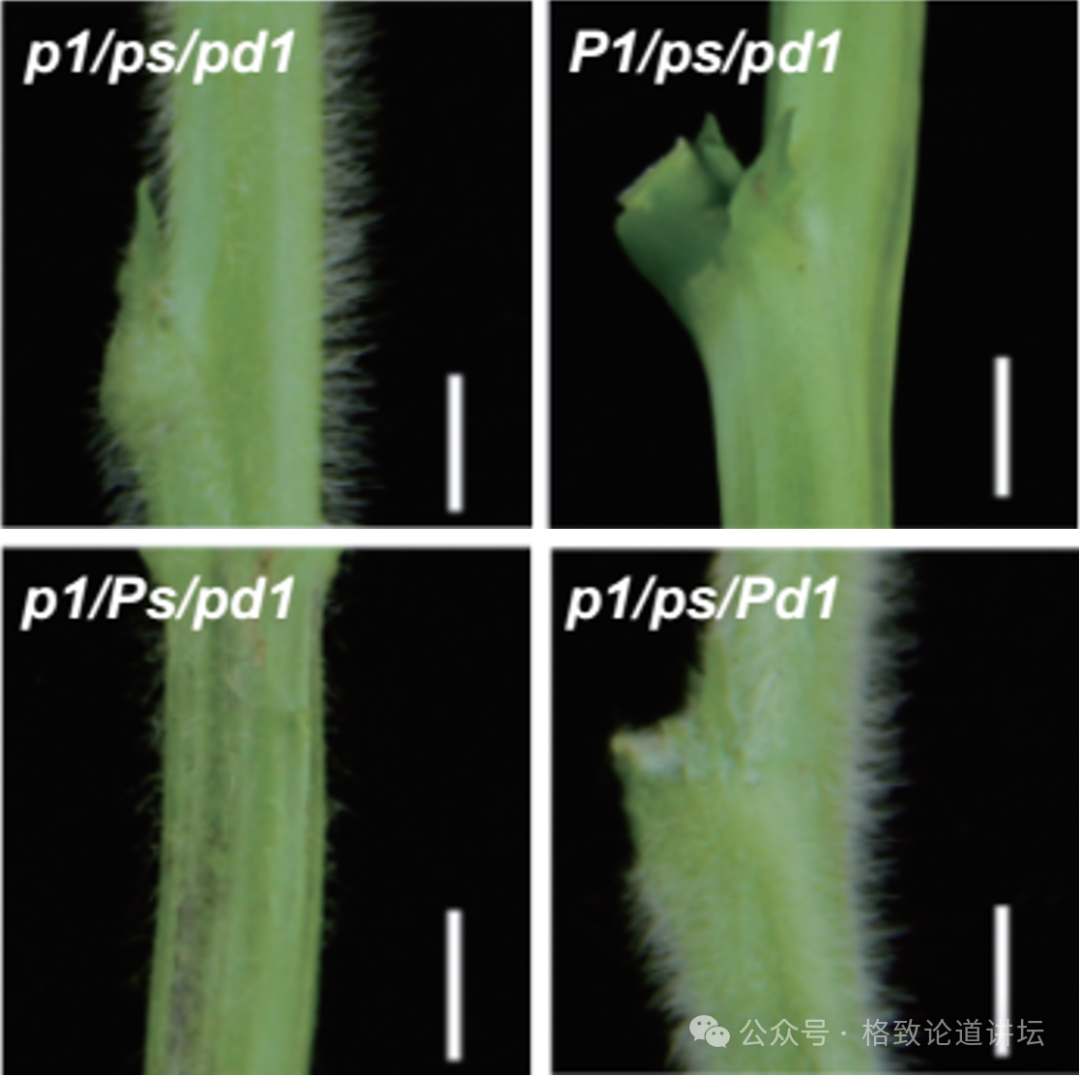
Liu et al., Molecular Plant, 2020
Today we're not discussing specific regulatory mechanisms, but rather thinking about the usefulness of having sparse hair. Our research has found that in drought conditions, materials with a lot of hair are basically not drought-resistant and quickly wither away. However, materials with less hair or even no hair at all are extremely drought-resistant.
Some people may think, why not just breed all soybeans to be hairless, so they don't prick your mouth when you eat them.
However, in environments with pests, hairless animals are often bitten and left with holes all over, whereas those with more hair are largely unaffected. Therefore, when breeding, we must consider this balance. Even for a trait as small as hair, we need to maintain it at a relatively appropriate level.
Some people say that breeding is an art, but in fact, it is the result of comprehensive balance. So, how can we guide better breeding from a mechanistic and knowledge-based perspective? We analyzed the genes that control 57 traits and explored which genes regulate different traits, ultimately forming a complex molecular module system network.
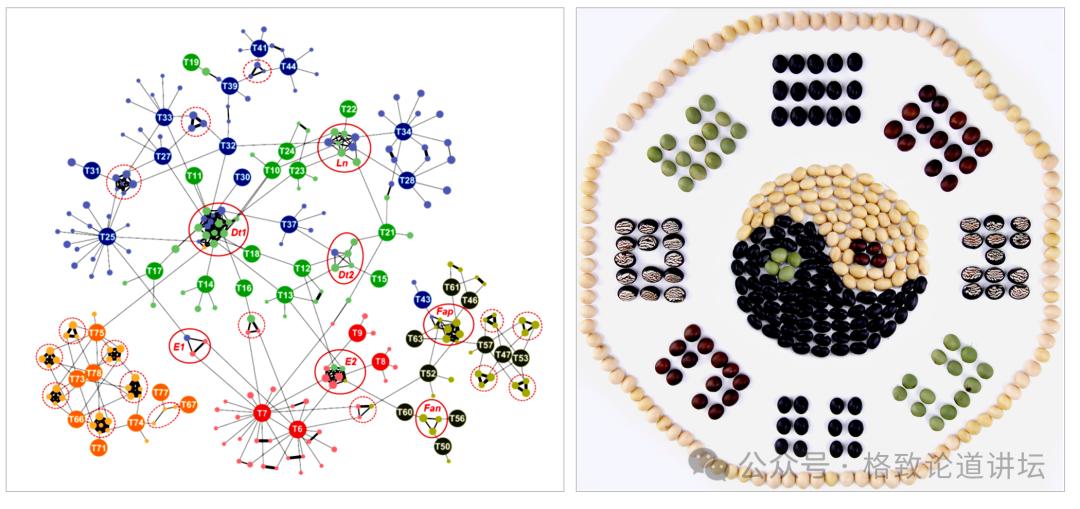
Fang et al., Genome Biology, 2017
Under the guidance of this network, we have cultivated many varieties, and these are just two examples. Ke豆 series' Ke豆10 is a high-yielding, high-protein variety, while Ke豆103 is a high-yielding, high-oil variety. The path of molecular design breeding has basically been proven to work.
We hope to make more efforts in the future and make greater contributions to China's soybean industry, such as increasing production.
Making Saltwater Areas Productive Too
Completion rate: 70%
Is doing just this enough, though? Actually, it's far from sufficient. Our shortfall is enormous, as I mentioned earlier - 80% of our soybeans are reliant on imports, and the fundamental issue is that we don't have enough arable land.
So is it possible to further expand our arable land? The country currently has 1.8 billion mu of arable land, and more than 100 million mu of saline-alkali land that has not been utilized. Can soybeans grow on this saline-alkali land? With this question in mind, we began researching on saline-alkali land in 2018, with Dongying in Shandong Province being one of our key test sites.
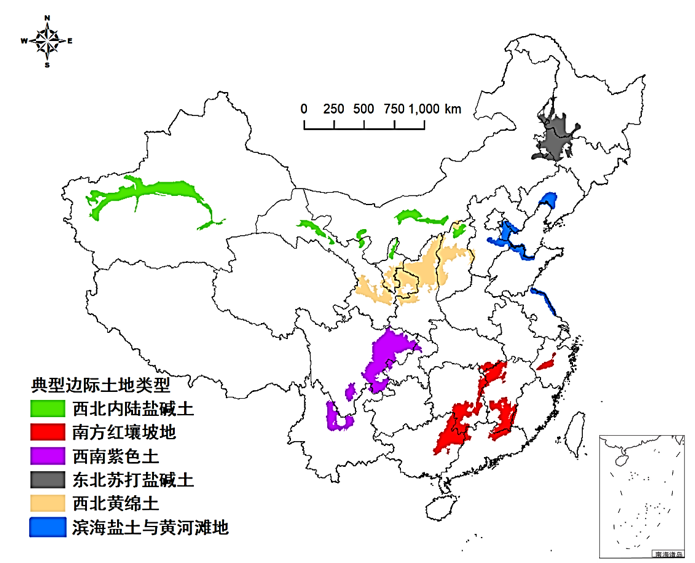
Shandong's Dongying is a coastal city that is very pretty, with numerous salt flats. This is a typical salt flat scene in the area, with mostly alkaline bushes growing there.
This was back in 2018, and conditions were still very harsh, but we were overjoyed to be traveling by three-wheeled tractor. At the time, we sifted through 3,000 sets of materials, and we were convinced that we would definitely be able to find what we were looking for.
However, by autumn, the results were extremely disappointing, with most of the materials dying off and very few remaining. Even the few that were left behind did not produce any yield, failing to bear any beans. Our farmer brothers would not bother planting a crop that does not produce beans and only grows a few bean stalks.
It was only later that we came to understand the local conditions, which are quite unique in this saline-alkali soil area. When soybeans are planted in June, the area is extremely dry and has the highest salinity, so the soybeans need to be drought-tolerant and resistant to salinization. In July, typhoons arrive, bringing heavy rainfall and flooding, which means the crops need to be flood-resistant. By August, the weather is extremely hot, requiring the soybeans to be heat-tolerant. Come September, the typhoons have passed and the water has receded, but the salinization returns, so the soybeans need to be resistant to salinization once again. Therefore, to breed a soybean variety that can thrive in these conditions, many comprehensive traits need to be considered.
Later, we came up with other methods, such as coating. After coating, it can retain moisture well, ensure its growth, and resist salinization. We also screened some local microbial fertilizers and added some biological microbial fertilizers to help it resist salinization.
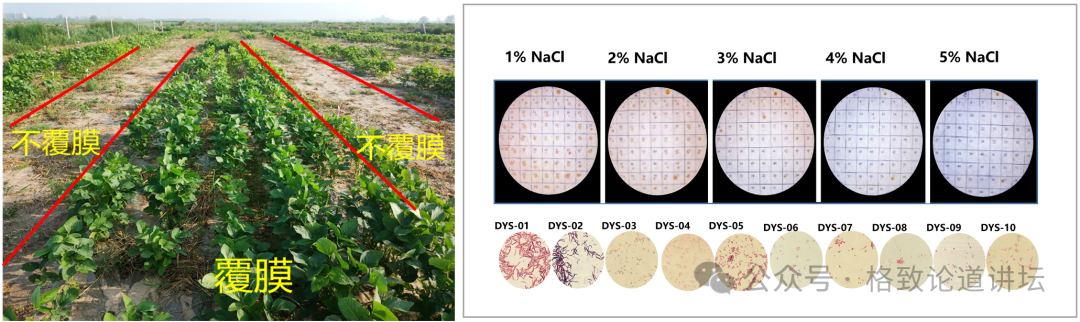
It then slowly selected some excellent materials.
Over the past five years, we have worked extremely hard in the fields, just like farmers. Today, I'm wearing a suit and pretending to be a scientist, but if I were in the fields, nobody would be able to find me.
So far, we have screened around 16,000 soybean genetic materials and found 25 excellent salt-tolerant materials, and also achieved some results.
We currently have 600 mu of land in Dongying, and if anyone is interested in visiting, they can contact us to take a look at our land. Many local companies have seen the good results of our planting, and we plan to expand to several thousand mu in 2024.
In 2021, the actual yield per mu of TZX-805 and TZX-1736 reached over 260 kilograms. In 2022, the actual yield per mu of Kedou 35 reached 270 kilograms.
In 2023, we further optimized the planting density of Kedou 35 and found that at a planting density of around 11,000 plants per mu, its yield per mu reached 306 kilograms.
These crops rely entirely on natural rainfall for growth, as there are no irrigation conditions, making this a truly remarkable achievement that brings us great comfort.
Recently, we also came across something we found particularly intriguing: the salt-tolerant soybeans mentioned earlier, which yield 306 kilograms per mu, produce an exceptionally delicious soy milk. That discovery has delighted us to no end.
Later, we made some small gift boxes ourselves to give to friends to drink, and the packaging was also designed by us. If everyone visits our Institute of Genetics and Development, I invite everyone to try our soy milk, it's really delicious, and when poured, it's a bit like milk.
In 2023, there was an unexpected discovery. As mentioned earlier, the Kedou 103 we cultivated is a high-yielding and high-oil variety, which was also a characteristic during the variety appraisal process. However, we found that its tolerance to salinization and alkalization is extremely strong. The top-right image shows Zaoyuan County in Heilongjiang, where the land is largely alkaline, with a pH level above 9. In such conditions, Kedou 103 can still survive, demonstrating its excellent alkaline tolerance.
It's been over 12 years since I returned to China, and I've been working hard, but the goal of solving China's soybean problem is still far away.
I also hope to encourage myself with two sentences: "The road is long, but if we walk, we will arrive; the task is difficult, but if we do it, it will be accomplished." I also hope that the efforts of more soybean industry professionals will help resolve China's soybean crisis.
Thank you, everyone.