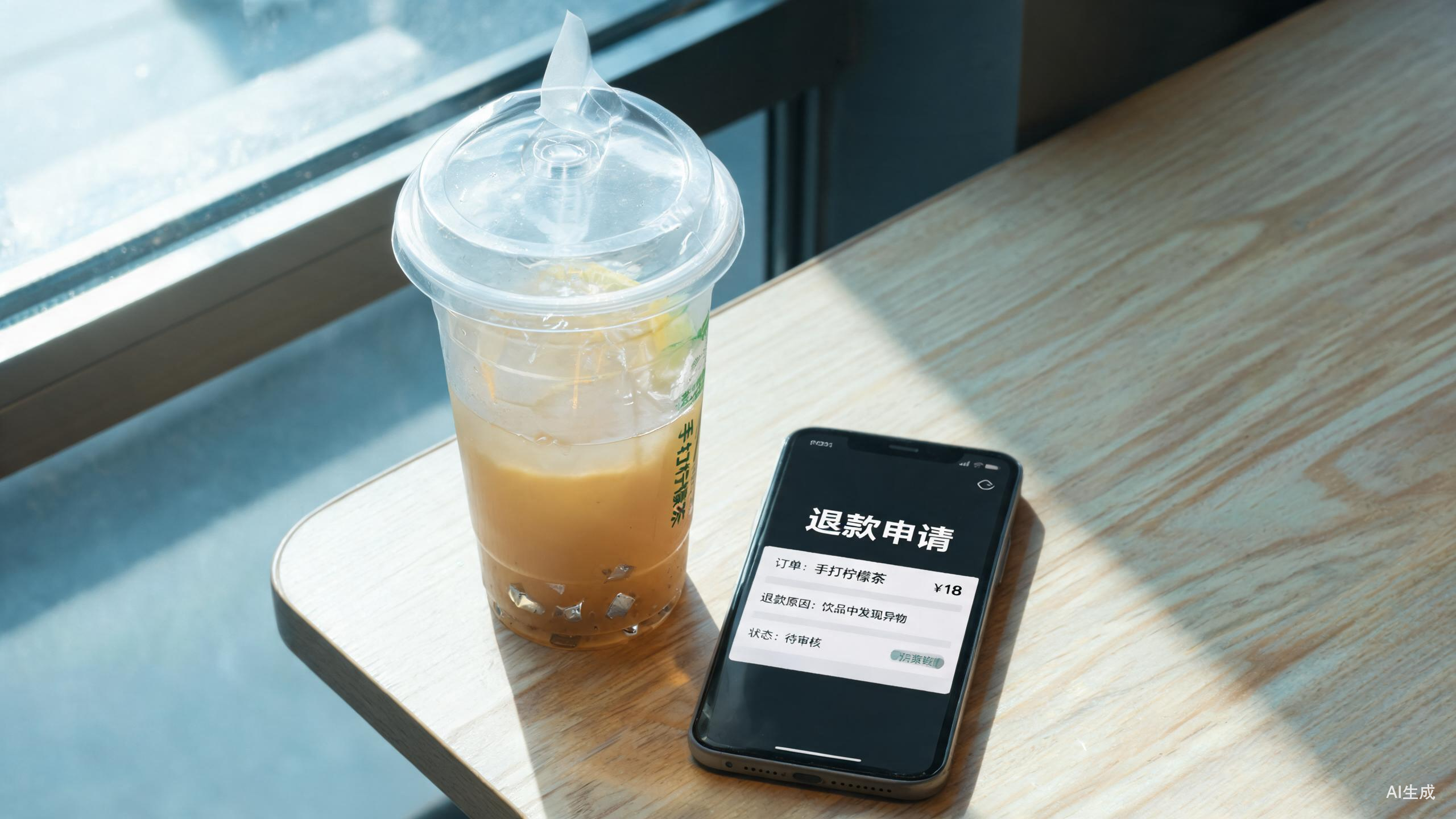
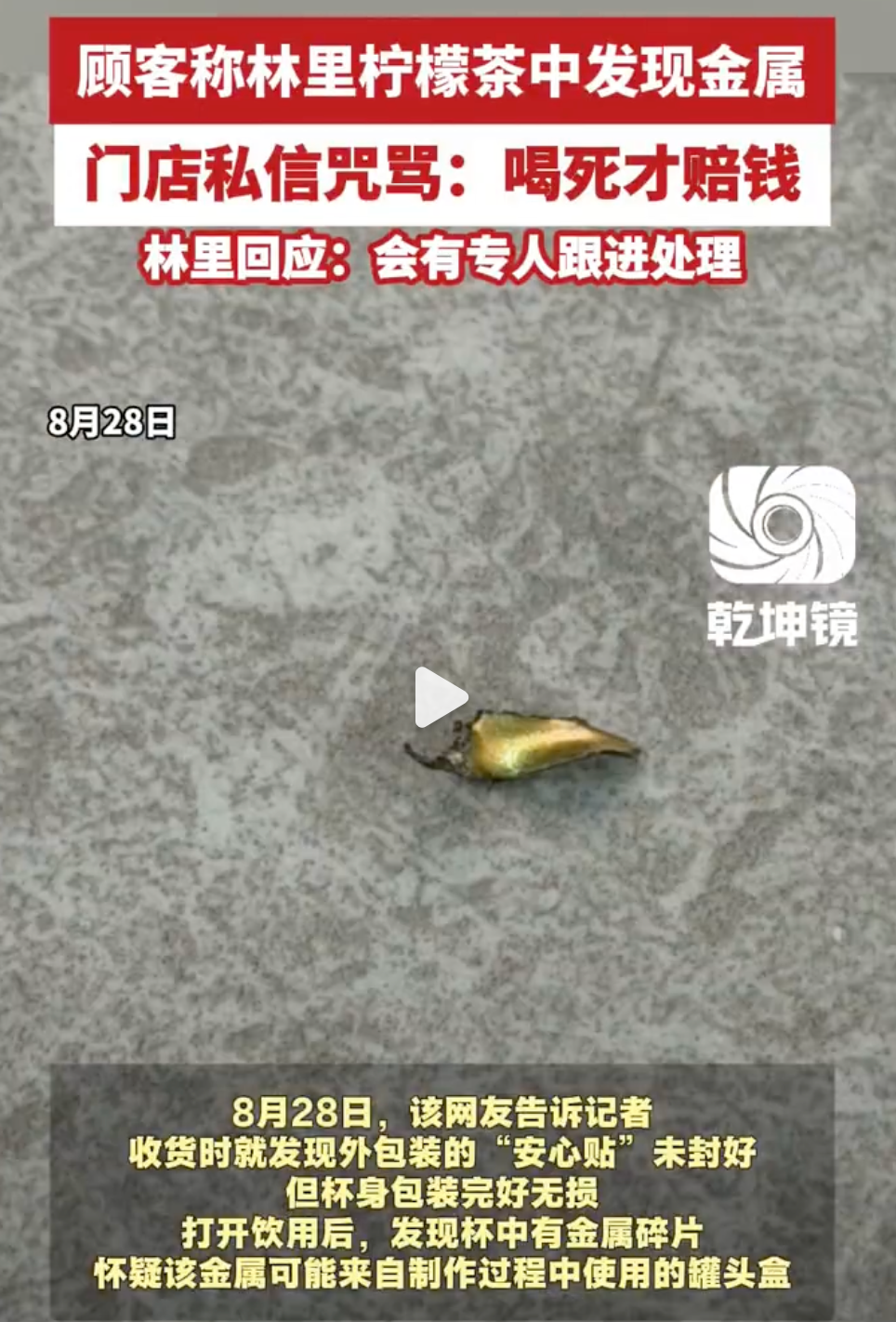
On August 28, a customer in Chuzhou, Anhui, found a piece of metal fragment in a cup of Linri lemon tea purchased through a food delivery service.
What really made her decide to expose the matter was not the metal piece, but the few sentences that followed.
The customer only said one sentence of apology, but the boss responded with three sentences.
The issue arose when the customer received the product and found that the "安心贴" on the outer packaging was not sealed properly, although the cup itself was intact. While drinking from it, she discovered metal fragments at the bottom of the cup and suspected that they may have been introduced during the manufacturing process, possibly from opening a can.
Chat records show that the store initially agreed to a refund and even asked her to pour out the drink and take a video, which was still part of the normal handling procedure at that point.
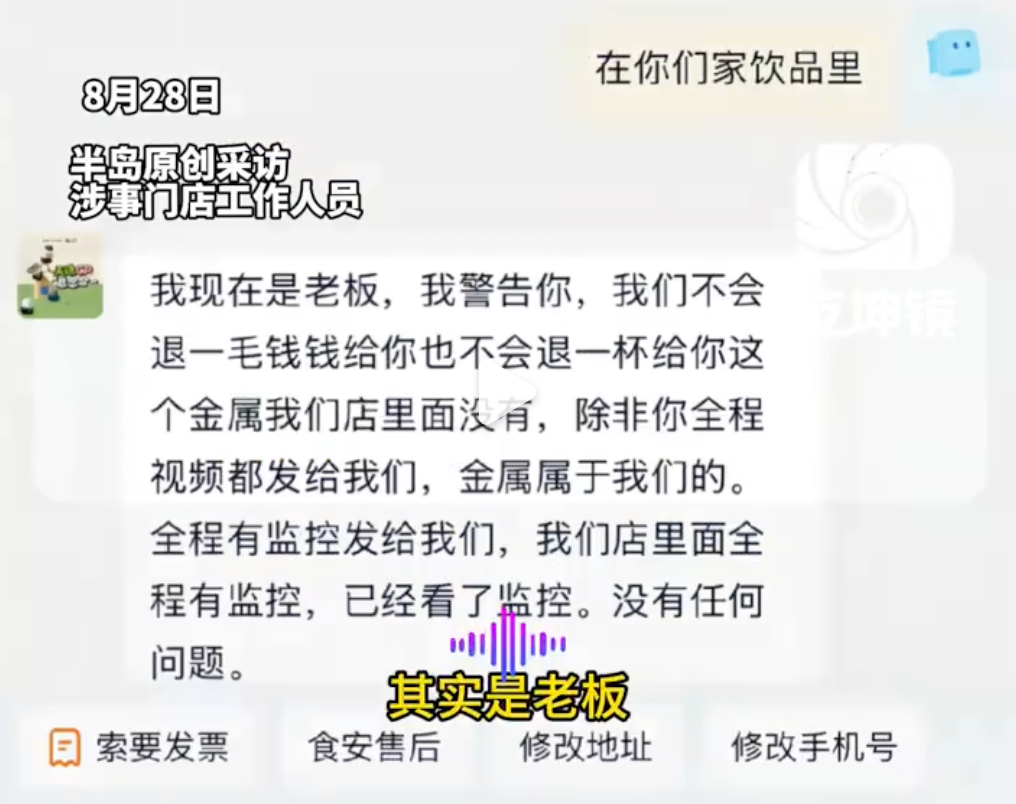
The tone then shifted. "I'm the boss now, and I'm warning you, we won't refund a single penny or a single drink. We've checked the metal detectors in our store and there's no issue."
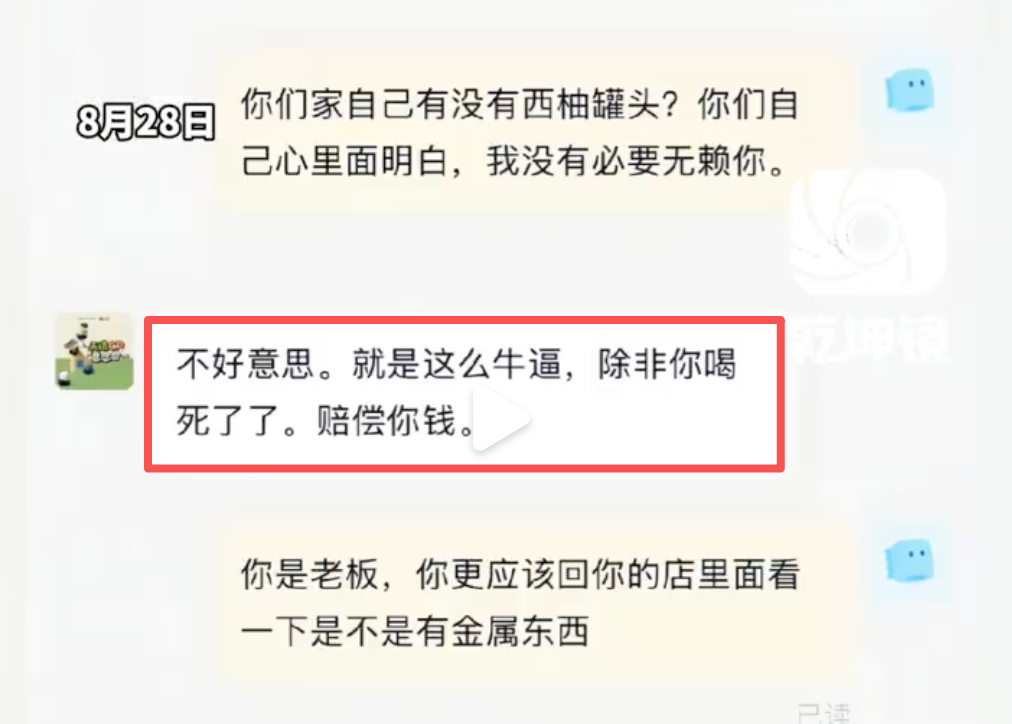
The next two sentences are even more provocative.
Unless you drink yourself to death, we'll refund your money.
"One cup doesn't even earn me 3 yuan, so thank you, but don't drink it anymore."
All the customer had wanted from start to finish was something very simple - she explicitly stated that she did not want financial compensation, but rather a sincere apology from the merchant.
I've watched this conversation several times.
What the customer wants is an apology, which doesn't cost a penny or take a minute, and the issue will likely be resolved after that, at zero cost.
The boss made three blunt remarks, turning a minor complaint that could have been easily resolved into a potential powder keg that could erupt at any moment.
This is the most costly way to lose money in a crisis — not because you lost too much, but because you didn't need to lose a single cent in the first place.
Surveillance footage cannot confirm the authenticity of the health code sticker
A reporter contacted the store in question, Linli Lemon Tea's Mingguang Sports Road branch. A staff member said the person who scolded was indeed the boss, and that the store had never encountered such a situation before.
They checked the surveillance footage and found no food safety incidents at the store, and "there is no evidence that the metal came from our store." The store also stated that it is willing to let the customer view the surveillance footage in the store or have an employee go to her home to play the video for her, but the customer refused.
There is a positive aspect to this attitude, as they are willing to go to the customer's home to play back the recording, which indicates that they do not intend to be completely dishonest.
But it answered a different question.
The unsealed "Anxin Tie" in the customer's hand and the surveillance footage in the store's possession are two completely different things.
Anxin Tie is a trust mechanism designed by the brand itself, and its sole purpose is to answer one question: whether the product has been tampered with from the time it leaves the factory to the time it reaches the consumer's hands. If the sticker is intact, the store is responsible; if the sticker is broken, responsibility is unclear. This is a voluntary commitment made by the brand to consumers, and it is not required by law.
Monitoring constitutes process evidence. It can verify whether there were issues in the production workflow, but it cannot attest to the condition of the product once it leaves the premises.
So the store said "we checked the surveillance footage, and there's no problem", this statement might be true, but it can't explain why the sticker was opened.
You can't reassure consumers with a seal and then say it has nothing to do with you when the seal is broken.
This is legally sound, as the burden of proof lies with the party making the claim, and the customer needs to provide evidence to prove that the metal is from the store.
This PR approach is self-destructive. It turns a "we'll investigate" issue into a "you prove it to me" issue. The only evidence the customer has is the very label that the brand itself affixed, but did not affix properly.
Unless you drink yourself to death, this is really stupid
Many people's initial reaction to this statement is to condemn it as vicious. I don't see it that way. Being vicious means knowing the consequences and still choosing to speak, but this boss seems to be completely unaware.
He assumed compensation required a death from drinking.
The law doesn't work that way.
Article 148 of the Food Safety Law stipulates that if a producer manufactures food that fails to meet food safety standards, or a seller knowingly sells such food, consumers may, in addition to claiming compensation for losses, demand compensatory damages of ten times the purchase price or three times the losses incurred. Where the additional compensation amounts to less than 1,000 yuan, the minimum shall be 1,000 yuan.
A thousand yuan is the floor, not the ceiling.
Is anyone in charge of the group?
That's the story at the store level, but there are two more levels above that.
A journalist called Linli's official customer service hotline and waited for about 15 minutes without getting through to a human operator. After switching to the WeChat mini-program to find an online customer service representative, the response was that someone would follow up and handle the issue.
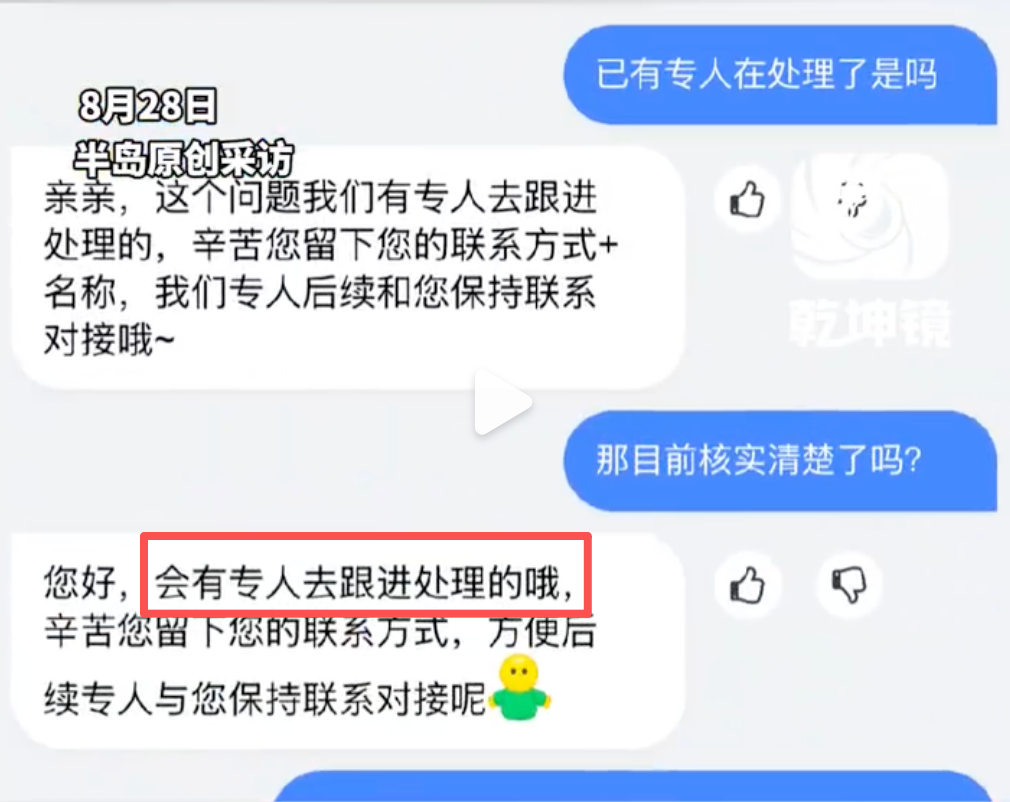
As of press time, Linli has not released a statement regarding the matter.
In other words, a brand with nearly 2000 stores, in response to a food safety complaint that has been reported by the media, made its highest-level public statement, which was limited to a single sentence in the customer service section of its mini program.
After discussing these points, let's explain the term "boss".
In this franchise system, the term "boss" has two faces.
To headquarters, he is a supervised, audited, and assessed franchisee, a node in the system that needs to be managed.
To customers, he is the decision-maker. "I'm the boss now, I'm warning you," he says, wielding the full authority of the latter role.
The trouble is that the fallout from what he said in that latter persona must be borne by the brand behind him.
The right to operate can be outsourced, but responsibility cannot. This is one of the most easily overlooked costs in the franchise business.
In closing
It's tough for those in the food and beverage industry, with challenges including rent, labor costs, platform fees, and fluctuations in ingredient prices, to the point where a cup of lemon tea may not even yield a profit of 3 yuan.
Just because it is true, it is even more necessary to calculate another account.
When a customer only gets an apology, that's when the issue is at its cheapest.