
(This article was originally scheduled to be published on March 5, 2025, and was intended to be split into two parts, but due to the sensitive timing in China at that time, it was combined and delayed. Disclaimer: This article does not provide investment advice, and is purely a personal reflection and opinion; the author's transactions do not represent any particular stance, and investors should make their own investment decisions based on their individual financial situation, investment goals, and other factors, and bear the corresponding investment risks.)
At the beginning of the year until March, the Shanghai Composite Index was booming, with foreign capital being extremely bullish. In contrast, the Nasdaq was underperforming, in a state of "Kuang Ye Jia Cuo". The calls of "the East rising and the West declining" have once again emerged.
The previous account of my experiences in Portugal received positive feedback, with many saying they enjoyed such records. Coincidentally, I took a trip to the US in March, spending nearly half a month traveling from east to west, visiting New Jersey and New York on the east coast and Las Vegas on the west coast. Additionally, conversations with friends in the US provided some non-touristy insights into life and work, so I'll record my feelings and experiences for reference.
Let's break it down into several aspects: clothing, food, housing, and transportation, and discuss each one individually.
Travel or Commuting
My US visa was issued in 2017 and is valid for 10 years, so I bought a round-trip ticket and registered for EVUS without any extra procedures. I arrived at Newark Airport in New York, and possibly due to the European flight, the immigration process was simple, with only a few questions asked: what is the purpose of my trip, how long I will stay, and whether I had brought any fruits like bananas or oranges. After answering, I was allowed to pass through, and the process was relatively smooth. I had previously read about many experiences of being detained in a small room during immigration, so I was quite anxious before departing.
After leaving the airport, I found an airport pickup service run by a team of Chinese people, with team members mostly being Taiwanese individuals with US residency. When I talked to him about his income, he said his unit price is $60, equivalent to around 440 yuan, with daily earnings of at least $300 and up to $4,000 or $5,000 on busy days. He works 25 days a month, with an average workday of around 8 hours, typically from 5:00 AM to 8:00 AM, 1:00 PM to 3:00 PM, and 9:00 PM to 11:00 PM, avoiding rush hour times (mainly due to the nature of airport pickup and drop-off services). His customer base is relatively stable, consisting of long-term clients (there are many Chinese people in New Jersey).
My brother was driving a Tesla, using its FSD autonomous driving feature the entire time, with his hands off the wheel. I joked that he must be making money easily, with automatic order acceptance, navigation, and driving. He said there are also concerns, though - if Tesla's driverless cars were to operate nationwide, his business would be heavily impacted. I asked him if he thought they would be completely replaced, and he said no, because the market is too big, with many customized demands that cannot be met, and on the other hand, with rising prices, many people are working as Uber drivers part-time, so full replacement would cause employment problems. (I said this logic sounds just like what they say on the other side of the ocean, and the driver said doesn't it seem like things are becoming more and more similar in all aspects?)
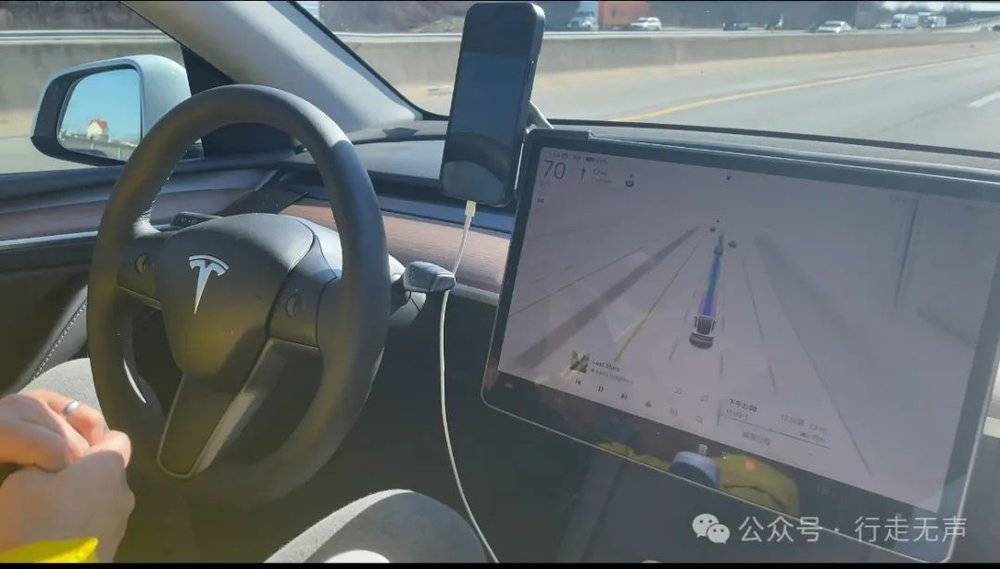
(My brother just used FSD to drive all the way)
Theory is one thing, but actual experience is another, as I learned from my textbook about "a nation on wheels" and now, after spending nearly half a month in the US, where transportation is mostly by car, the feeling is still different. The roads are wide and the speed is fast, and people's living radius is wider. In this situation, experiencing FSD and seeing the frequency of Teslas on the road, as well as the differentiated lifestyle brought by transportation tools, is still quite shocking.

The Cybertruck, which has a relatively high street appearance rate
Those few days coincided with the news of Tesla being boycotted, and its stock price also plummeted, so I bought some at the $220 level (not an investment advice). The last time I operated on it was in April 2024, when I bought from $200 to $160, and adjusted my portfolio in July 2024, selling at $254. To be honest, the holding experience was not good, with big fluctuations. But putting aside the technological aspects, like TSM, the biggest risk is political risk.
Commodity prices
Let's talk about food prices again. Personally, I've always liked Costco, but its stock price has been relatively high, so I've been adopting a low-buy, high-sell strategy, mainly focusing on cyclical fluctuations. Before I came, I saw a plethora of news reports at home saying that Americans couldn't afford eggs, so my first stop was to visit Costco and get a firsthand feel for the price level. As a supermarket that can be considered relatively affordable for the general public, its food prices have a certain degree of representativeness.
First, egg prices. At Costco, they cost $8 for a carton of 24 (roughly 58 yuan), while at Asian specialty grocers like 99 Ranch, they run about $1 per egg. Overall, prices have indeed risen, but the situation is nowhere near the dire picture being painted. Prices are similar on the West Coast in Las Vegas and the East Coast in New Jersey, and are on par with Western European egg prices.
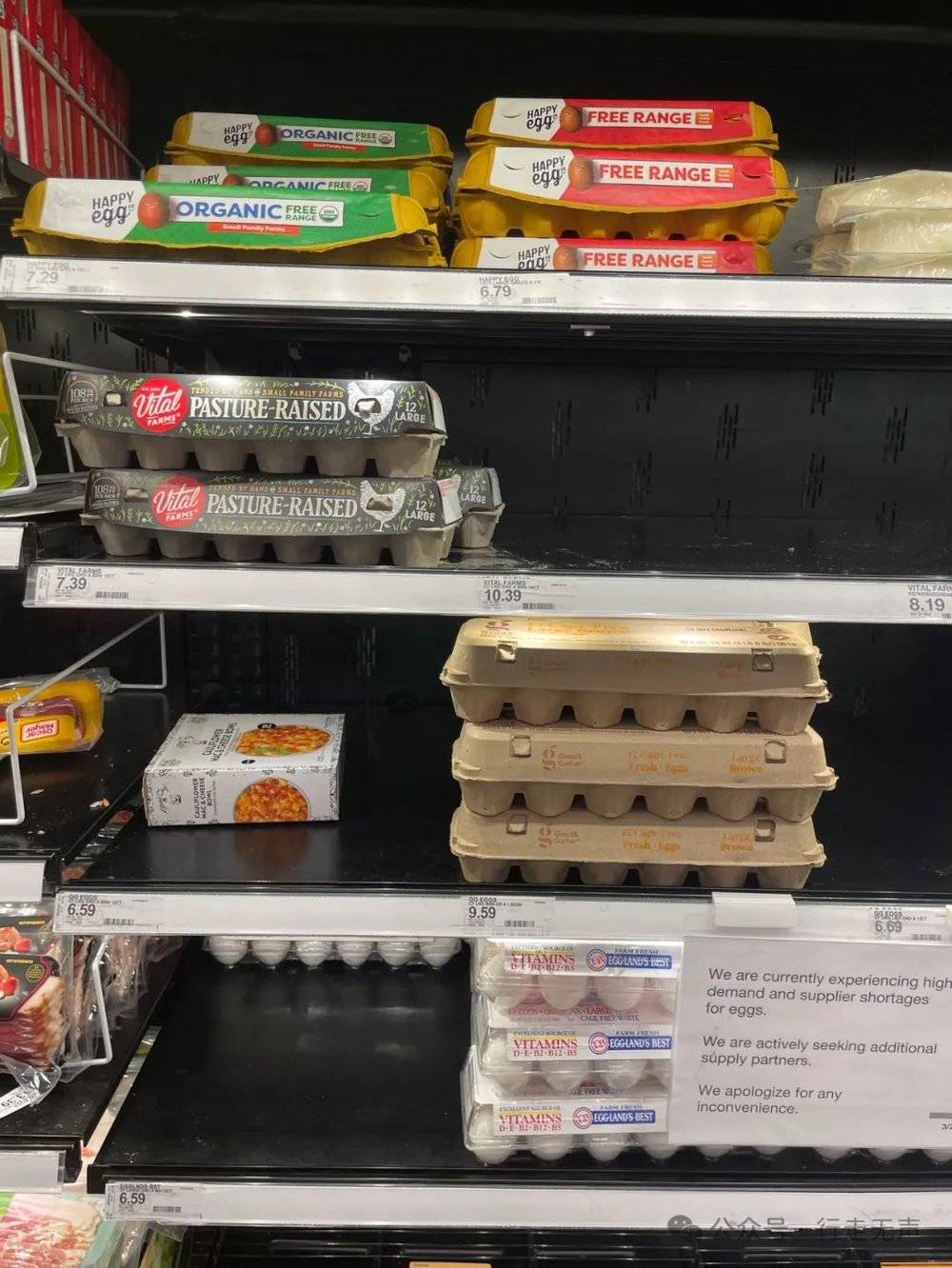
(Different priced eggs, photographed at a Target supermarket in Las Vegas on March 10, 2025)
Next is the price of meat. It has been a while since I last bought meat domestically, but compared to Western Europe, the price of meat in the US is relatively cheap, including chicken, beef, mutton, and fish. The only drawback may be that, similar to Sam's Club back home, the packaging here tends to be larger, which can be less convenient for singles or people living alone, as they have to buy in bulk.

(Salmon at 80 yuan per jin, photographed March 5, 2025, at Costco in New Jersey)

Various types of fish, photographed on March 5, 2025, at 99 Ranch Market in New Jersey
Third, vegetables. Vegetable prices in the U.S. are also cheaper than in Europe. At Asian supermarkets, specialty vegetables from both northern and southern China are available, with a far greater variety than what you'd find in Western Europe.

(A variety of vegetables, photographed on March 5, 2025, at 99 Ranch Market in New Jersey)
I visited Costco on Tuesday afternoon at 2 pm and Wednesday morning at 11 am, and it was as crowded as Sam's Club in Beijing's Xihongmen area on weekends (I wonder if everyone is not working). In contrast, the adjacent Walmart was relatively empty. Overall, based on the customers waiting in line to check out, it seems that an average of $100 can buy a family's worth of food for three days. Therefore, if one cooks at home instead of eating out, the food prices are not high compared to the average income (the ratio of earning dollars to spending dollars). Roughly estimated, if I maintain my current lifestyle and consumption habits, the cost of living in the US should be lower than in Western European countries like Belgium and the Netherlands. Moreover, for the same cost of living, the US offers better food quality and variety compared to Europe. On the day I left the US, I purchased a Costco membership at the airport for $90.
Chinese food
Incidentally, the prices at Chinese restaurants are also worth mentioning. Among European Chinese restaurants, Switzerland and the Nordic countries are the most expensive, followed by Western and Central Europe, while Southern and Eastern Europe are relatively cheaper. In terms of personal experience, the prices of Chinese restaurant dishes in New Jersey, USA are similar to those in Central European countries, but the US has a mandatory tipping system, which, when calculated, is roughly on par with the first tier of European countries.
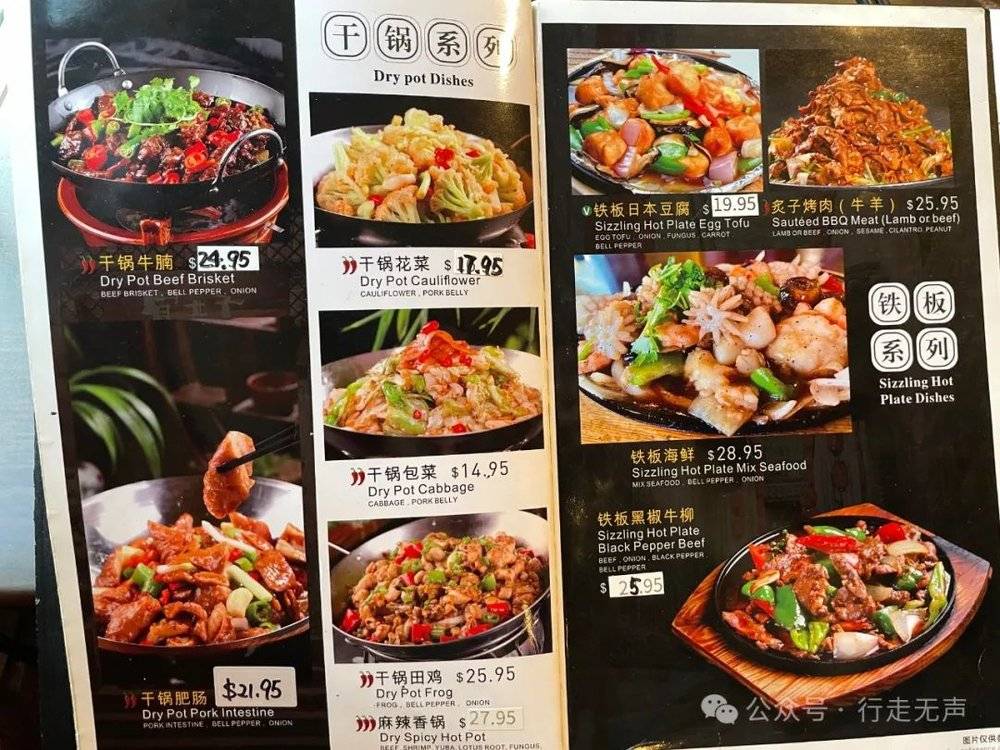
Local top-ranked Chinese restaurants' prices, photographed on March 4, 2025, in Princeton
As for clothing, I didn't pay much attention, mainly because I only spend around 300 to 500 yuan per year on clothes, so I don't have much experience. When charging my Tesla, I spent half an hour browsing an outlet store and found that the prices of sports brands like Adidas and Nike were similar to those in China. Taking the classic Timberland yellow boots as a comparison, the European outlet priced them at around 120 euros per pair, while the one in New Jersey, USA was $99, which is not extremely cheap, but at least not expensive.
I live in Edison, New Jersey, which was named after Thomas Edison, the inventor of the light bulb, and is also a place where Chinese scientist Fei-Fei Li once resided. The town has a population of around 100,000, with Asians, including Chinese and Koreans, accounting for over 40% of the total population. The mayor is a Democrat of Korean descent. It takes about an hour to get to New York from Edison by train or car, and many people live here while working in New York, similar to the relationship between Beijing's Tongzhou and Daxing districts. The apartment I visited is quite new, with a two-bedroom, one-living room layout of about 100 square meters, and includes free parking, a dog park, swimming pool, children's playground, game room, billiards room, audio-visual room, and conference room, among other amenities. The monthly rent is around $3,200, which is approximately 24,000 yuan.
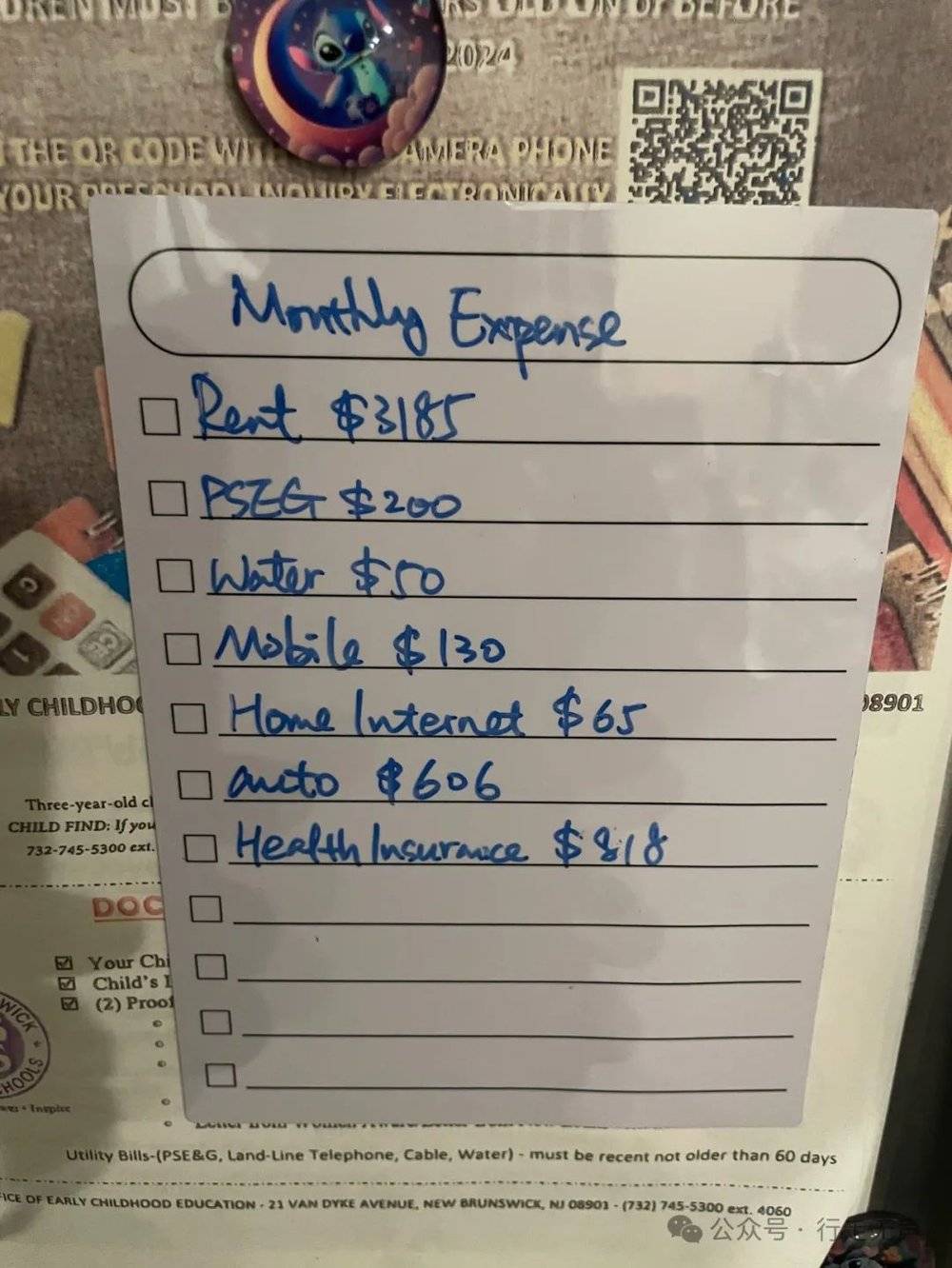
A look at the monthly fixed expenses of an ordinary family, including water, electricity, internet, heating, insurance, and car maintenance.
Based on 2023 data, the median household income in New Jersey was $101,050 (Reference 1), and the per capita personal income was $82,103 (Reference 2); in 2025, the average rent in New Jersey was $2,029/month (Reference 3).
The median listing price for a house is around $560,000 (approximately 4.1 million yuan), with an average price of $540,000. The real estate market remains a "seller's market," likely due to its geographical location and the continuous influx of new residents. The average days on market (DOM), which refers to the time it takes for a house to go from being formally listed to signing a purchase contract with a buyer, is approximately 47 days. This represents a year-over-year increase of 7.2% to 9% in 2024, with predicted growth of around 2% to 4% in 2025.
Data reference:
According to data from DataUSA, New Jersey has a total population of approximately 9.29 million people, with a median age of 40.2 years. The median household income is $76,475, and the median property value is $342,800. New Jersey has a diverse economy, with major industries including pharmaceuticals, finance, and technology. The state is home to many major companies, including Johnson & Johnson, Prudential Financial, and Verizon. The top occupations in New Jersey include management, business, and finance, as well as healthcare and technology. The state has a highly educated workforce, with 39.4% of the population holding a bachelor's degree or higher.
The Nonperforming Commercial Paper of Commercial Banks in Japan, as tracked by the Fred economic data series NJPCPI from the St. Louis Federal Reserve, reflects the total amount of nonperforming commercial paper held by commercial banks in Japan.
New Jersey's rental market trends can be found on Apartments.com, which provides data on the state's average rent prices, popular neighborhoods, and available apartments for rent. According to the website, the average rent for an apartment in New Jersey is around $1,800 per month. The most popular cities to rent in New Jersey include Jersey City, Newark, and Hoboken, with the majority of renters searching for one and two-bedroom apartments. The website also provides information on the top neighborhoods to rent in, including Downtown Jersey City, Newark's Ironbound neighborhood, and Hoboken's waterfront area. Additionally, Apartments.com offers a rental market trends report, which includes data on year-over-year rent growth, average rent prices by city, and the most popular amenities among renters in New Jersey.
New Jersey real estate market data is available on Redfin's website, providing users with access to information on the state's housing market, including home prices, sales trends, and other relevant data.
New Jersey's housing market has experienced significant fluctuations in recent years. According to data, the median home price in New Jersey is around $430,000, with an average price per square foot of $230. The state's housing market is characterized by a mix of urban and suburban areas, with cities like Newark and Jersey City experiencing rapid growth and development. In terms of sales, New Jersey saw a total of 92,000 home sales in 2022, with a median days-on-market of 47 days. The statewide inventory of homes for sale is approximately 24,000 units, representing a 2.5-month supply. Mortgage rates in New Jersey are currently around 6.5%, with the average 30-year fixed mortgage rate at 6.3%. Some of the most popular cities in New Jersey's housing market include Jersey City, with a median home price of $640,000, and Newark, with a median home price of $380,000. Other notable cities include Hoboken, with a median home price of $820,000, and Princeton, with a median home price of $930,000. The New Jersey housing market is expected to continue growing, driven by factors such as limited inventory, low mortgage rates, and
According to Zillow, the median home value in New Jersey is $340,000, with values having increased 8.4% over the past year.
Navigating North Jersey's 2025 real estate market is expected to be characterized by steady growth, with the area's unique blend of urban and suburban landscapes, excellent schools, and convenient transportation options continuing to attract homebuyers. According to forecasts, the region's housing market will remain robust, driven by low inventory and high demand. In 2025, North Jersey's real estate market is anticipated to see a moderate increase in home prices, with a growth rate of around 3-5%. This upward trend is expected to be driven by the area's strong economy, with major industries such as finance, healthcare, and technology contributing to job growth and stability. The rental market in North Jersey is also expected to remain strong, with rents anticipated to rise by around 2-3% in 2025. This increase will be driven by the ongoing demand for housing, particularly in urban areas such as Jersey City and Hoboken, where young professionals and families are drawn to the region's vibrant cultural scene and convenient access to New York City. Despite the anticipated growth, there are potential challenges on the horizon for North Jersey's real estate market. Rising interest rates and increasing construction costs may impact affordability and slow down development, while changes in government policies and regulations could also
In other words, a typical New Jersey family seeking a comfortable but not extravagant standard of living would generally spend between 24% and 32% of its annual income on rent.
If a family were to save up to buy a house by not spending on food or other expenses, it would take around 5 or 6 years, while an individual with a job would need about 7 years, to afford a single-family home. The appreciation in the house's value would be enough to cover the annual property tax of around 2.23%.
What kind of house could I get for that price? I found a random listing online for $440,000. The monthly mortgage would be around $2,700. The lot is 660 square meters, and the house itself is 156 square meters. It has a garage in front, a storage shed in back, and sits along a river. It looks like this:
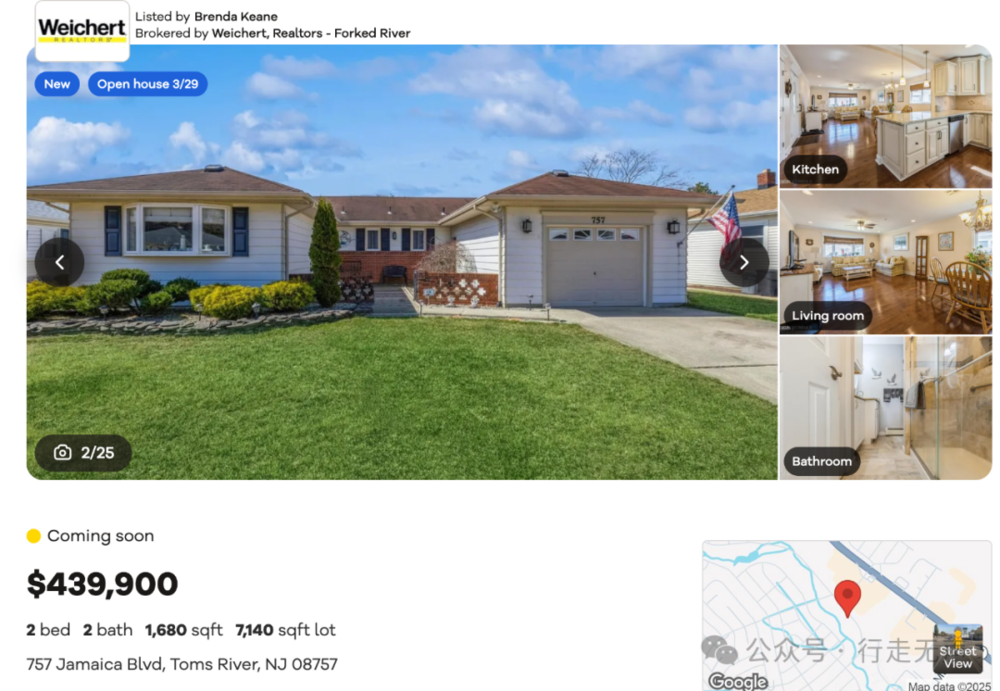
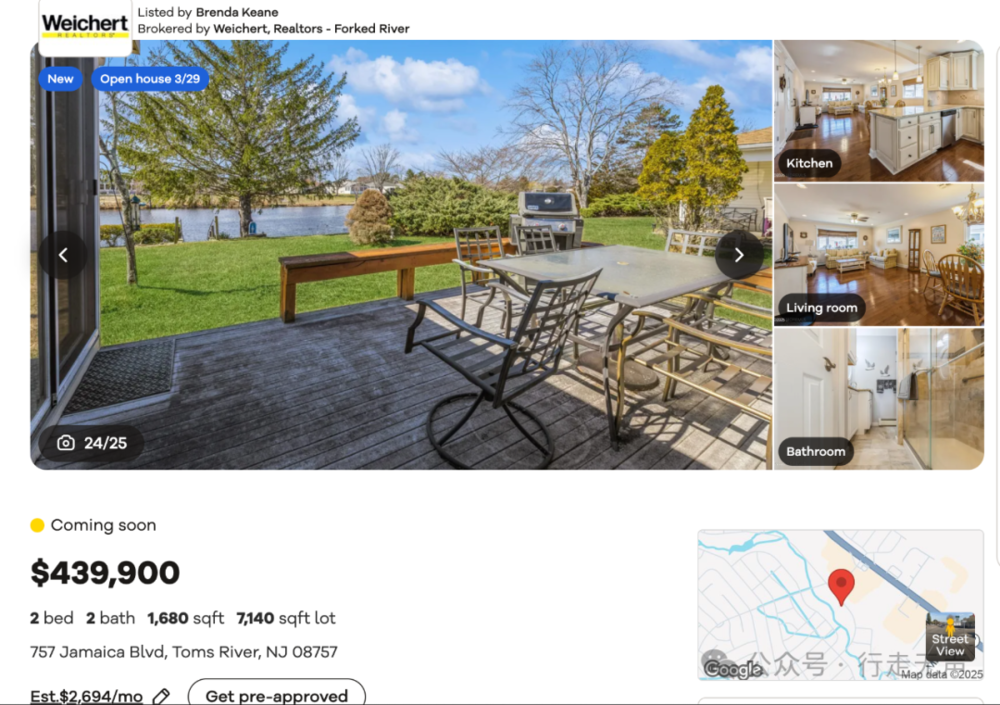
https://www.realtor.com/realestateandhomes-detail/757-Jamaica-Blvd_Toms-River_NJ_08757_M67946-29847?from=srp-list-card
By comparison, housing prices in New York City run higher, while Las Vegas is more affordable. I've included a table below for your own reference and consideration—I'll leave it at that.
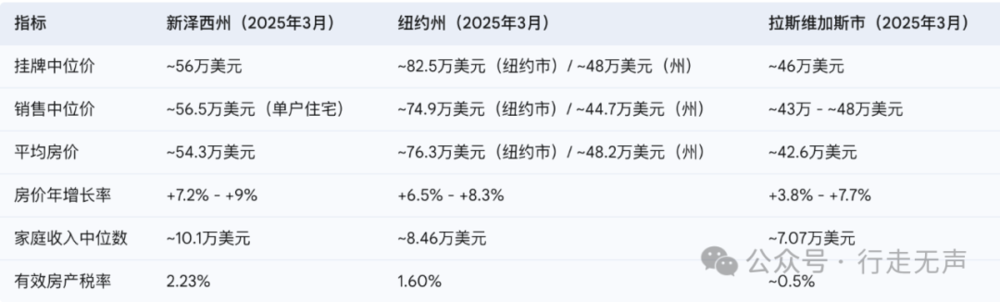
(A comparison of housing prices in several US locations, for reference only)
That covers the objective facts. Now for my subjective take.
Personal feelings and thoughts
Statement: Objective circumstances are facts, subjective feelings are opinions, and opinions vary from person to person, so if you don't like it, please don't attack.
Public-transit-oriented and car-oriented commuting have each reshaped living spaces in their own ways. In some respects, this also captures a slice of the differences between China and the US. In a society like China's, where public transit dominates, commute times depend on the coverage density of rail stations and bus routes. In a car-centric society, by contrast, commute time becomes a metric of "acceptable driving time." Take Chicago: the "time-space compression" of a 30-minute drive extends one's living radius to 25–35 kilometers, encompassing residential options across seven different administrative districts.
Chinese city housing prices typically decay exponentially from the city center outward — witness the gap between Shanghai's inner and outer ring roads, or the price differentials across Beijing's 3rd, 4th, and 5th ring roads. U.S. metropolitan areas, by contrast, show markedly flatter price gradients, thanks to the spatial equalization effect of automobile ownership. Within a 10-kilometer radius of downtown Los Angeles, the coefficient of variation in home prices is just 0.3; over the same distance in Beijing, it reaches 0.8 (Source: Numbeo, 2023).
3. Different modes of transportation lead to different consumption spaces and consumption patterns. China's consumption space can be broadly divided into a three-tier system of "community commerce-regional commerce-urban commerce", while the US has a two-tier system: community convenience stores or vending machines (0-5 minute drive) + super shopping centers (15 minute drive). Businesses will use "driving time isochrones" for site selection, in line with the Hexagonal Market Area Theory (Christaller, 1933).
A typical example is Walmart's site-selection algorithm: it draws a 15-minute drive radius (covering roughly 80,000 to 120,000 residents) and prioritizes highway interchanges over traditional downtown locations. This model gave rise to the standard "shopping center plus parking lot" format, where the parking area often exceeds the store itself. Once this site-selection model proves viable in one location, it can be replicated across most of the United States and scaled up.
Costco's warehouse format is a quintessential example—its average store serves a 32-kilometer radius, offsetting low visit frequency (1.8 times per month on average) by driving up basket size (average ticket of $136). From that standpoint, I believe Costco's model is highly defensible in the U.S., which is why I've made it one of my core holdings.
In China, businesses follow the "rail transit station gravity model," forming concentric circles of decay centered on subway stations. Taking Shanghai as an example, commercial rents within 500 meters of a subway station can command a high premium, sometimes as much as 300%. This results in commercial facilities being distributed along subway lines in a "tentacle-like" pattern. I recall that Meituan Research Institute once released data showing that 65% of China's catering consumption occurs within 800 meters of a subway station. However, the logic and models for site selection vary significantly from province to province and city to city, requiring case-by-case analysis and thereby increasing business costs.
Consumption patterns and living spaces have had a profound impact on lifestyles and mindsets, and the US and China appear to be shaping two distinct forms of civilization: the "mobile tribe" centered on automobiles and the "node civilization" based on rail transit. The former prioritizes the maximization of individual mobility, while the latter emphasizes the optimization of collective transportation efficiency. From this perspective, looking back at the decision-making logic of both sides over the past few years, or even over the long term, does it make a bit more sense?
5. Meanwhile, friends of mine working in the US and Europe are now gradually shifting to remote work. Some don't go into the office at all; others only go in a few days a week. This frees them from the constraints of central urban hubs, effectively dissolving the traditional logic of cities. Companies can move headquarters to states and counties with lower taxes and cheaper labor, and employees can choose affordable, suitable places to live and work.
From a corporate perspective, if the business is internet-related, the previously hefty costs of rent, utilities, and internet no longer need to be paid at the same level. Meanwhile, from an employee perspective, if working from home is feasible and eliminates the daily toll of hours-long commutes and their associated costs, what's the necessity of being in a specific city? All that's needed is ensuring that daily necessities are within driving distance, and for families, access to educational resources. Whether one agrees or not, this is already an inevitable trend.
Under this trend, the logic of business is bound to be restructured. That's why I've added to my positions in Tesla, Costco, Amazon, and VST, and am considering opening positions in Coca-Cola, Spotify, Duolingo, and Netflix (personal trades, not investment advice). Tech stocks are fine for gazing at the stars, but what keeps you grounded is attribution based on demographic factors.
7. Domestically, however, a different demographic logic means remote work will not become the dominant model. The private sector is not the mainstream. Consumer spending power is largely concentrated in a single track — and that track happens to be one where remote work is not permitted. The logic of remote work is the civilizational form of the mobile tribe, inherently at odds with centralization, authority, and the collective. Most importantly, what is honey elsewhere can be arsenic here: remote work could shake the very foundations. This is not to say that working remotely leads to one outcome and not working remotely leads to another, but rather that it offers a window into the underlying logic of two different cultures. In short, if the first three or four decades of development relied on the demographic dividend, then today — as AI gradually closes the gap between sheer numerical advantage and universal education — where do we go from here? I'm no expert, but I think it's worth pondering.

(Can walking the dog like this lead to financial freedom?)
9. On the day before I left, I had dinner with a friend who asked if I liked America. I said I did, more than Europe. She asked why, and I said: like a jungle. Yes, a jungle—the way the world really is. We all know that water too clear has no fish, but shouldn't we ask ourselves: are we the water, or the fish?
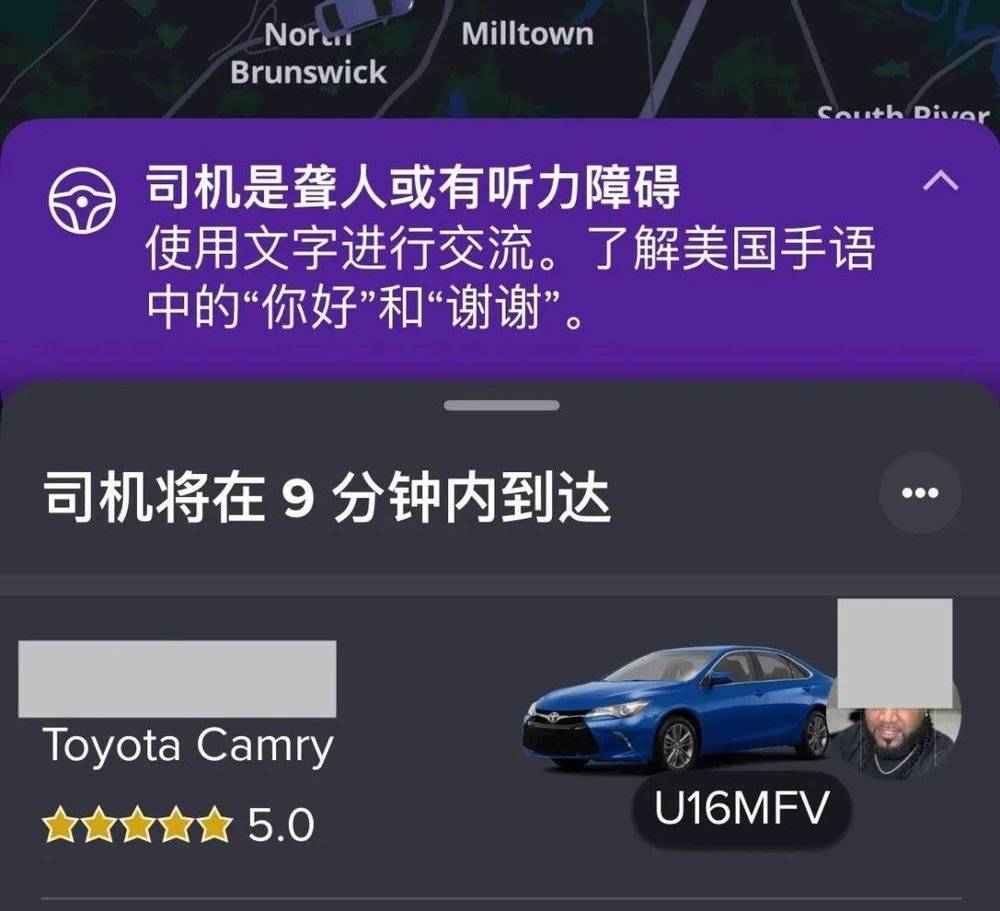
(Saw many female forklift operators, and also encountered a number of people with special needs.)
When I returned to Europe and reflected on what America had left me with, I wanted to answer this question: From a tourist's perspective, what is America?
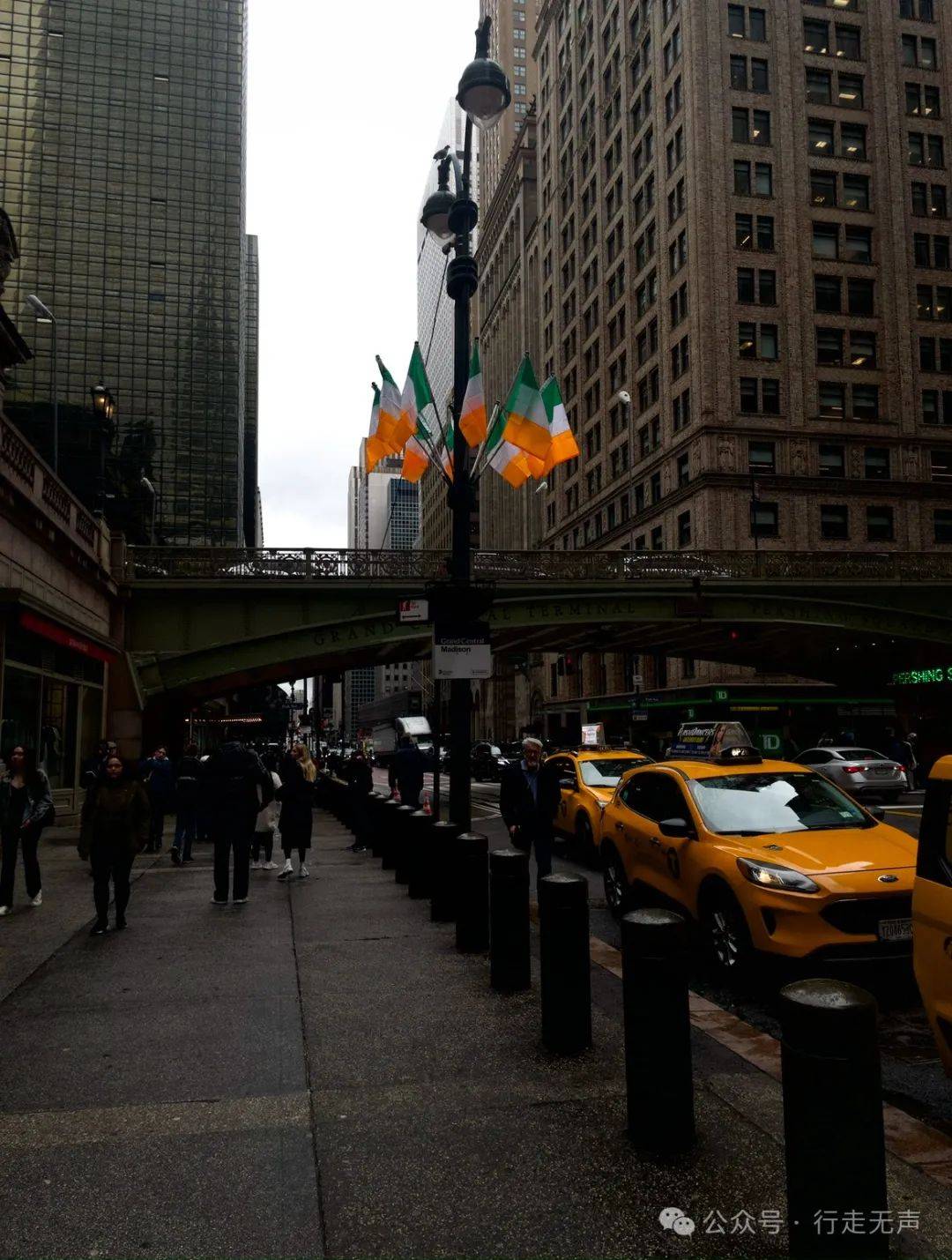
I was surprised to find there was no stereotype or preconception that could capture it. Having spent so long in Europe, being here where English is on every street corner—the feeling of understanding what people are saying around you is just wonderful. In New York, while watching a film about China, the French woman next to me kept trying to strike up a conversation; hailing a cab in the early hours, the driver was a deaf-mute Black man with a big gold chain, grinning warmly at me—I even picked up a couple of signs in sign language; on the train, a 92-year-old man told an 84-year-old, "You're still young, right in the prime of your life," and the 84-year-old laughed so hard I thought his dentures might fall out; the visual spectacle of the spherical screen at the Sphere in Las Vegas; on St. Patrick's Day, Irish flags lined the streets of New York; a Taiwanese resident said America was rotten to the core, and that once he retired he'd head back to Taiwan—the healthcare there was unbeatable; at the Las Vegas trade show, a Shandong boss was hustling, fighting to climb from the bottom of the supply chain and win pricing power.
I asked a New York guy who has spent nine years in China and speaks fluent Mandarin—here on a "business trip"—whether America is finished. He said: "F**k it. I've been hearing that my whole life. Who cares? If it's over, it's over. Either way, we all still have to make money tomorrow."
Everything is pure, bare, and simple—for survival, for life.
Conclusion
Back to the title: when we talk about "the East rising and the West falling," what exactly are we referring to?
We're not talking about how the crux of the matter is to grasp the crucial issues. What I've always wanted to talk about is the real lives of ordinary people.
Now I've gone to observe cross-sections of people's lives, and I've written them down to show you as well.