A look at Starbucks' latest financial report reveals a subtle sense of divergence:
On one hand, same-store sales grew 7.9% globally, achieving positive growth for the fourth consecutive quarter, with net profit attributable to the parent company of approximately $1.045 billion, surging 87.2% year-over-year;
On the other hand, total revenue was approximately $9.32 billion, a slight decrease of 1.4% year-over-year, with international division revenue plummeting 34% year-over-year.
Behind the sharp contrast of declining revenue and surging profits lies the significant change of China business fading out.
In April 2026, Starbucks completed the transfer of its joint venture with Boyu Capital, with approximately 8,000 company-owned stores in mainland China transitioning to a franchised model. The revenue recognition scope narrowed from recognizing full sales from company-owned stores to only recognizing licensing fees and merchandise supply revenue.
In a sense, this is more like a performance correction after "shedding its burden": after stripping out the Chinese market, which accounts for nearly a fifth of its global stores, from its consolidated statements, Starbucks' profit margin immediately rebounded sharply.
The improved financial numbers at headquarters have not dispelled the competitive dilemma and operational pressure faced by Starbucks China, despite changes in its equity structure. This US giant, which once defined China's coffee consumption, will need to struggle to survive in the future amidst the siege of local brands.
The impact of deconsolidating the China business on Starbucks' global financial results is most directly visible on the revenue line.
The financial report clearly shows that due to the impact of the new joint venture licensing structure in China, Starbucks' third-quarter consolidated net revenue decreased by 1% year-over-year to $9.3 billion, with the decline in international revenue almost entirely due to China. If this change in accounting methodology is excluded, the operating data of the global core market is actually continuing to recover.
In stark contrast, profits surged, with quarterly net profit rising 87.2% year-over-year, and non-GAAP operating profit margin increasing 430 basis points to 14.4%.
Between the decline and the increase, a reality is reflected: Starbucks China is no longer the engine driving global growth as it was in the past, but has instead become a weakness that drags down overall profitability.
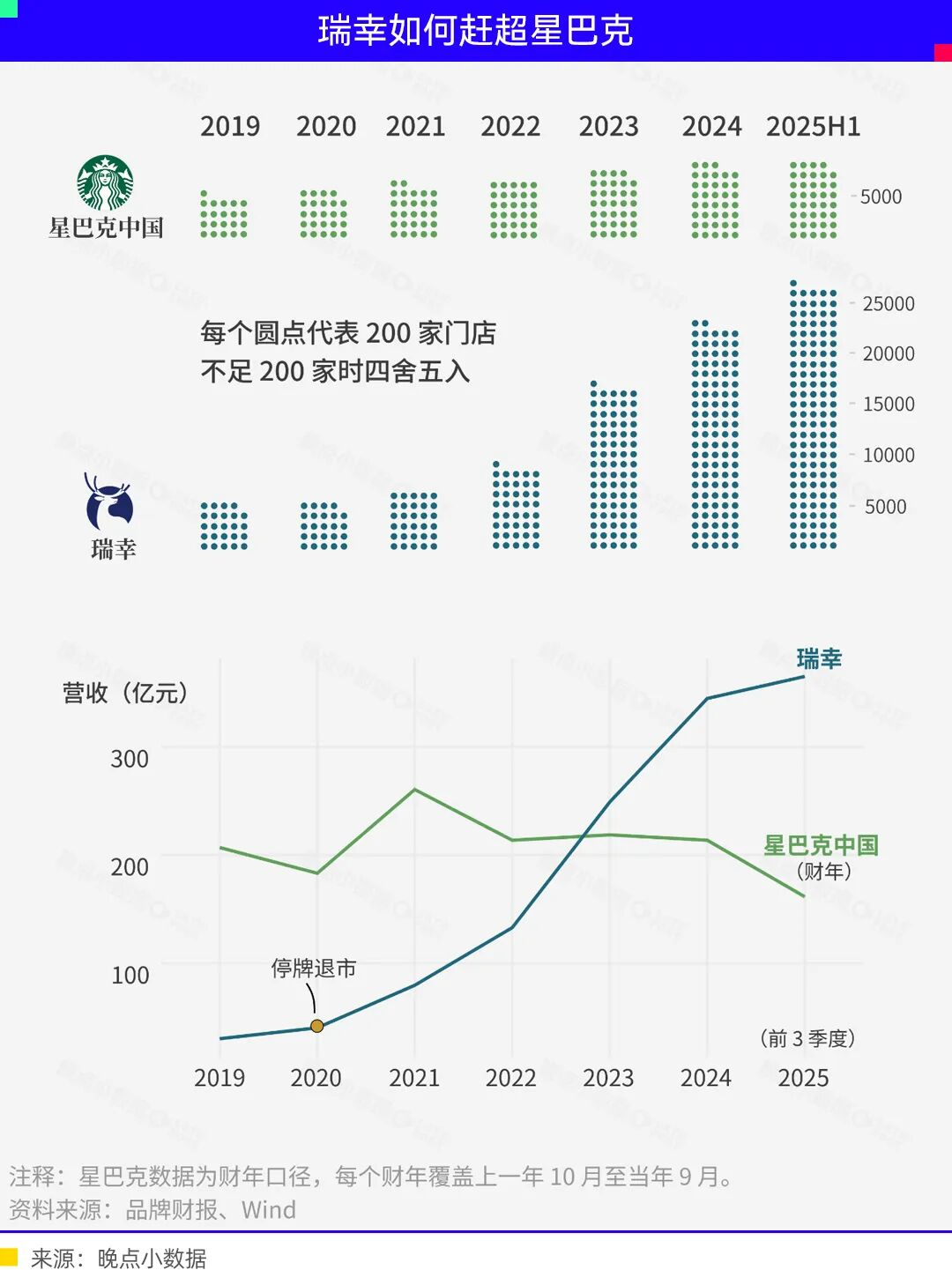
There were already signs that the Chinese market was weighing on Starbucks' performance, ultimately leading to the decision to sell.
In 2021, Starbucks China's revenue peaked at $3.7 billion, but then plateaued, dropping to around $2.958 billion in 2024, before slightly rebounding to $3.105 billion in 2025, with revenue essentially stagnant over the three-year period.
The discrepancy between the number of stores and their revenue contribution is even more telling. As of the end of the third quarter of 2026, Starbucks had a total of 41,304 stores globally, with approximately 8,000 stores in China, accounting for nearly 20%. However, these stores, which make up nearly a fifth of the total, contribute less than a tenth of global revenue.
The loss of market share is more intuitive. According to Euromonitor data, Starbucks' share of China's coffee market has been declining from a peak of 42% in 2017, and by 2024 it had fallen to 14%. Over seven years, its market share has evaporated by two-thirds.
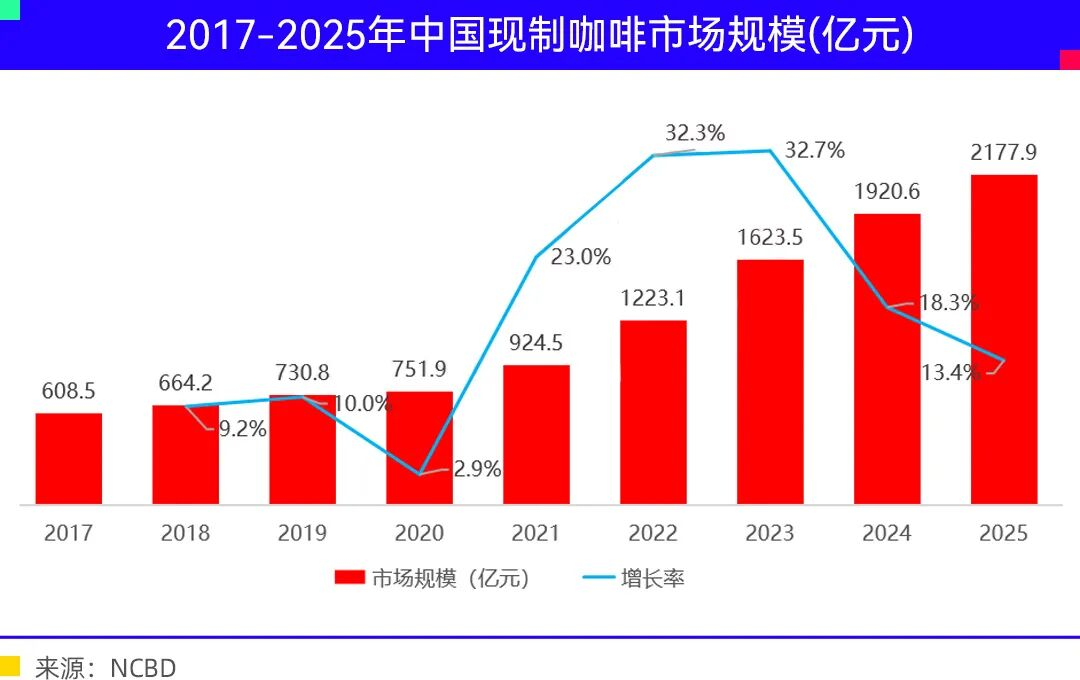
At the same time, the size of China's coffee market is actually in a process of continuous expansion.
According to statistics from the "2025 China City Coffee Development Report" released by the Shanghai Cultural and Creative Industry Promotion Association in conjunction with the Hongqiao International Coffee Port and other institutions, the overall scale of China's coffee industry reached 313.3 billion yuan in 2024, up 18.1% from the previous year.
The growth trajectory of the made-to-order coffee sector, which directly competes with Starbucks, is more pronounced, with data from industry monitors such as CBNData showing that China's made-to-order coffee market size was approximately 192.06 billion yuan in 2024 and is expected to grow further to around 217.79 billion yuan in 2025, representing a market expansion of over 13%. The industry's overall growth momentum presents a stark contrast to the stagnant revenue of Starbucks China.
What's more noteworthy is the valuation difference: some market calculations show that a single Starbucks store in China is valued at around $500,000, only about a quarter of the global average single-store valuation.
The same green logo and the same standard stores, but the capital value in the Chinese market has been greatly discounted. Behind this is the market's pessimistic expectations for its growth potential and profit efficiency.
From being the second-largest global market with high expectations in the past, to now needing to be stripped out in order to beautify global profits, Starbucks' relationship with the Chinese market has undergone a complete reversal in just a few years.
Starbucks' story in China was once a textbook case of consumer category growth.
In January 1999, Starbucks opened its first mainland store in the China World Trade Center in Beijing. At that time, most Chinese people's understanding of coffee was still blank, with a small number only familiar with Nestle instant coffee.
To cultivate the market, Starbucks incurred losses in China for nearly ten years. It wasn't in a hurry to sell coffee, instead patiently building the concept of a "third space": home is the first space, the office is the second space, and Starbucks is the social and leisure venue in between.
This positioning is highly accurate, tapping into the identity anxiety of China's white-collar workers amidst the country's urbanization process.
In 2003, an essay titled "I Struggled for 18 Years Just to Sit and Drink Coffee with You" went viral online. The class metaphors woven between its lines turned coffee—epitomized by Starbucks—into a tangible symbol of the petty-bourgeois lifestyle and elite identity. In that era, ordering a cup of coffee at Starbucks, snapping a photo by the window, and posting it on social media was, in itself, a form of social currency.
Starbucks once sold not just coffee, but a recognized, positive, and respectable lifestyle that was a rare form of identity authentication in a specific historical period.
With this strategy, Starbucks reached its peak in 2017, when it bought back the shares of Uni-President Group in the East China region for $1.3 billion, achieving full direct operation in the Chinese market. That same year, its share of China's chain coffee market reached 42%, almost dominating half of the market.
At that time, Starbucks was the undisputed king of the industry, defining the price range and consumption scenario for freshly ground coffee in China.
It was also that year that a turning point quietly occurred. In 2017, Ruixing was founded, and from then on, domestic coffee brands began to take a completely different path from Starbucks: small store model, digital operations, and a cost-effectiveness route.
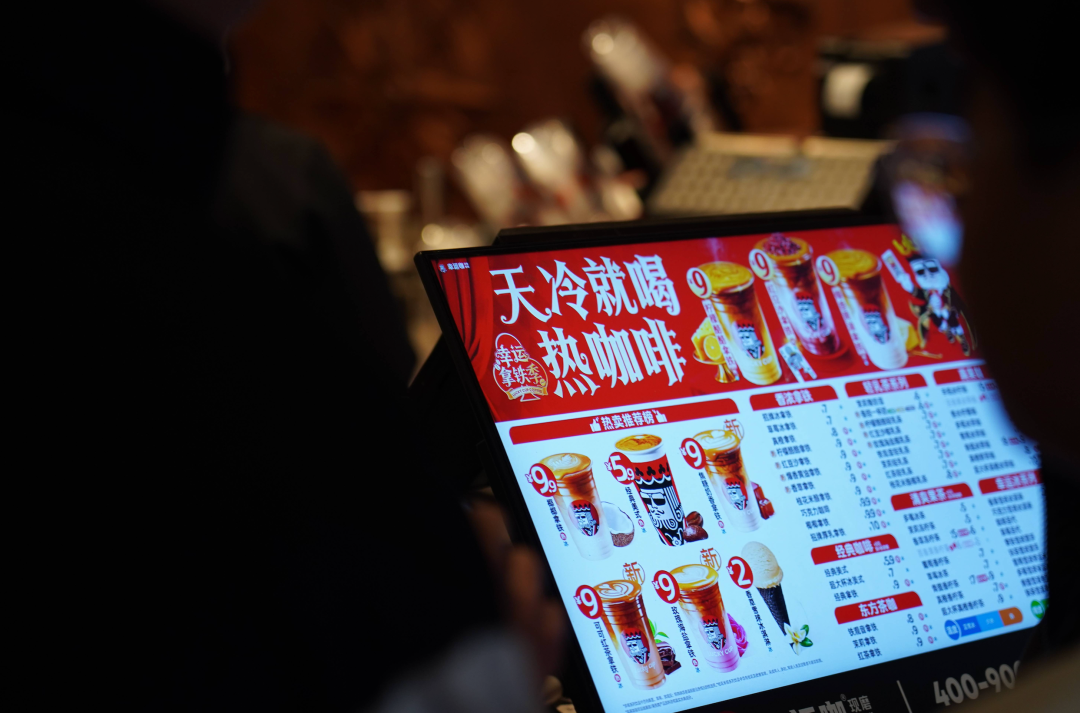
The real turning point came in 2023, when Kudi Coffee launched a store-wide 9.9 yuan promotion, and Ruixing quickly followed suit, introducing 9.9 yuan single items every week, sparking a price war that swept the entire industry, with almost all coffee and new tea drink brands being drawn in.
When a decent cup of coffee can be bought for under 10 yuan, consumers are hard-pressed to justify paying a premium for Starbucks' 30-plus yuan offerings. The quality moat that once set Starbucks apart has been rapidly filled in by China's local supply chain.
In 2023, Ruixing surpassed Starbucks in annual sales for the first time, becoming China's largest coffee chain. The gap has since widened, with Ruixing's total number of stores exceeding 31,000 by the end of 2025, and its annual revenue reaching 49.288 billion yuan, up 43% year-on-year. Luckin Coffee and Nuoqi Coffee have also successively joined the ranks of chains with over 10,000 stores.
The number of Starbucks stores in China has been hovering around 8,000, making it difficult to achieve further scale growth.
More importantly, coffee has thoroughly completed its transition from a high-end consumer product to a mass beverage, shedding its mystique: it is no longer a symbol of status, but has been reduced to a daily drink.
As coffee loses its mystique, Starbucks' brand premium also loses its most solid foundation.
The Model Dilemma
Behind the shifting market share lies a contest between two business models.
For a long time, Starbucks has adhered to a fully directly-operated model in China. The landing cost of a standard directly-operated store is usually between 3 million yuan and 5 million yuan, with flagship stores in core cities requiring even higher investment. From site selection, decoration, to personnel training and daily operations, everything is controlled uniformly by the headquarters.
The benefits of this capital-intensive model are obvious: a highly unified brand tone, stable services and quality, and the ability to maximize the maintenance of a high-end brand image.
However, its drawbacks are equally prominent: slow expansion, large capital occupation, and high costs, which are also the core reasons why Starbucks struggles to cope with price wars.
With the boost of the franchise model, the expansion speed of domestic brands has left Starbucks in the dust. Domestic brands can attract more operating partners through a light-asset model, quickly penetrating low-tier cities and sinking markets that Starbucks cannot cover, and setting up shop in every corner where there is demand.
By contrast, Starbucks, which has stuck to a direct-operated model in China, has been operating in the country for 27 years yet has still not surpassed the 10,000-store mark.
After forming a joint venture with Bailian Capital, Starbucks China nominally became a franchise, but essentially remained unchanged from its directly operated logic.
Currently, the joint venture is taking over the original directly-operated stores, with no fundamental changes to the management team or operating model. Starbucks Chairman and CEO Laxman Narasimhan previously stated in June 2026 that the company aims to increase the number of stores in China from 8,000 to 20,000 in partnership with its partners.
The issue is whether the consumption capacity of the lower-tier market can support 20,000 stores if prices are maintained above 30 yuan, and whether reducing prices would compromise the brand's premium accumulated over the years.
Operating pressures ultimately trickled down to frontline employees. The most symbolic change was the cancellation of "Bean Stock." This benefit, once a source of pride for Starbucks employees, was also a core symbol of its "partner culture."
However, according to reports from media outlets such as Tech星球, after the joint venture is established, employees who have been with the company for less than a year and new employees will no longer be granted "dou stocks". Although the already-vested "dou stocks" can be held until the end of 2027, the disposal plan for the unvested portion remains unclear.
Meanwhile, stores in multiple locations have begun adopting hourly pay, replacing the previous system of monthly salaries plus a 14-month annual package. Some employees report that actual take-home pay has declined after the switch to hourly wages, with full-time positions reduced and the share of part-time and student workers rising significantly.
Pressure is also reflected in the allocation of sales tasks, with store employees being assigned sales KPIs for everything from Star Ice Cream to mooncakes, and from peripheral products to prepaid cards, and facing interviews or performance deductions if they fail to meet their targets, incidents that frequently emerge on social media.
On the eve of the Dragon Boat Festival in 2026, an incident was exposed in which an employee was under too much pressure to sell Starbucks Ice Cream Dumplings and faced unreasonable demands from customers.
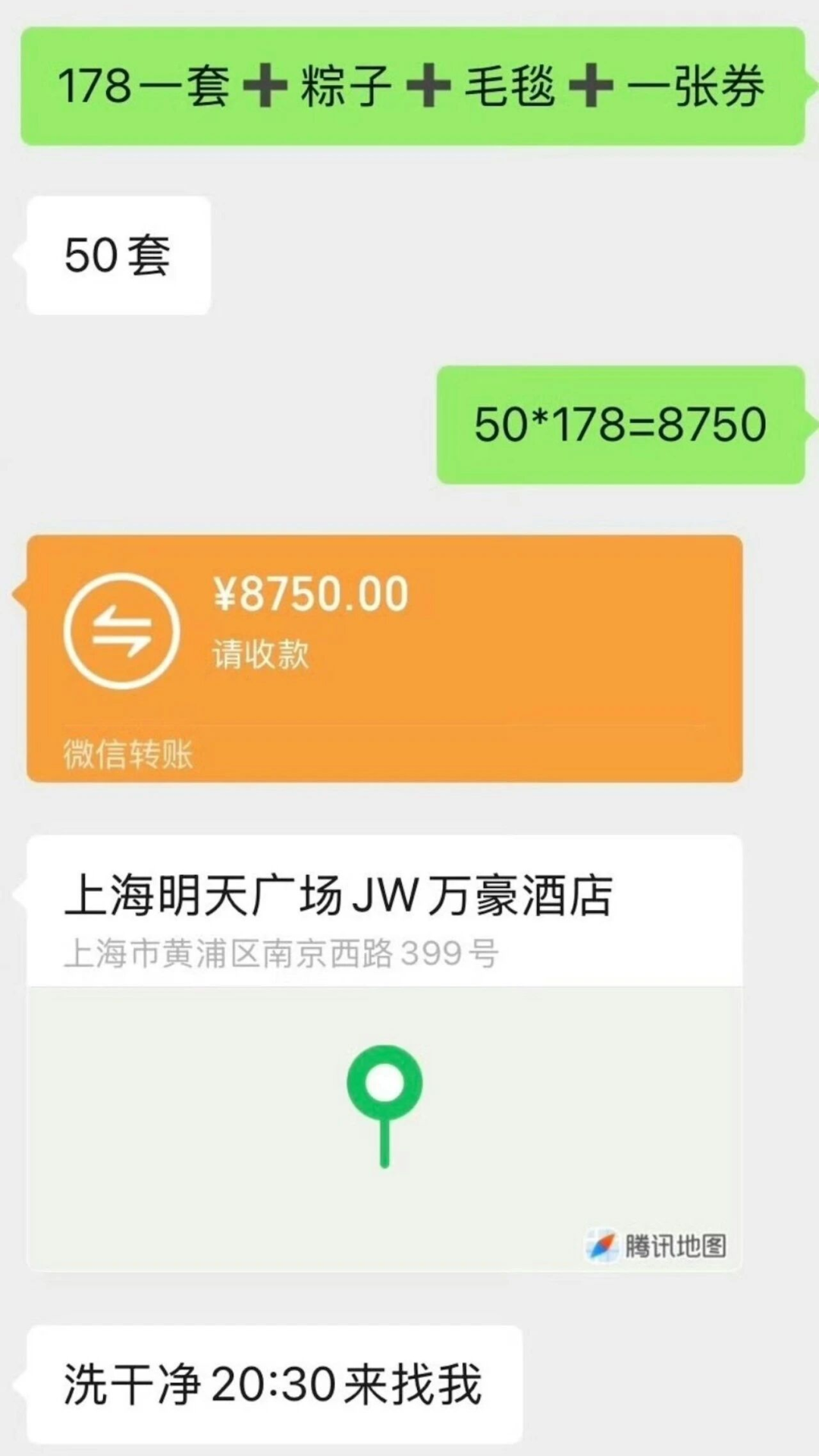
When a coffee company known for its spatial experience, identity symbol, and high-end image starts pushing its frontline employees to sell products to meet performance targets, the enormity of its operational pressure is self-evident.
Separating the Chinese business from the consolidated statements has indeed made Starbucks' global financial reports look much better.
But the problem is that this is more of a tactical financial maneuver rather than a strategic breakthrough.
At the end of the day, the Chinese market is not a place that can be won over by financial manipulation alone. Especially since numerous Chinese coffee companies have already explored a more localized, efficient, and low-cost operating model, a new situation that Starbucks had not encountered in its many years of development.
The story of Starbucks in China is still far from being easily told, and it can even be said that this new story is much harder to tell than KFC and McDonald's stories in China.