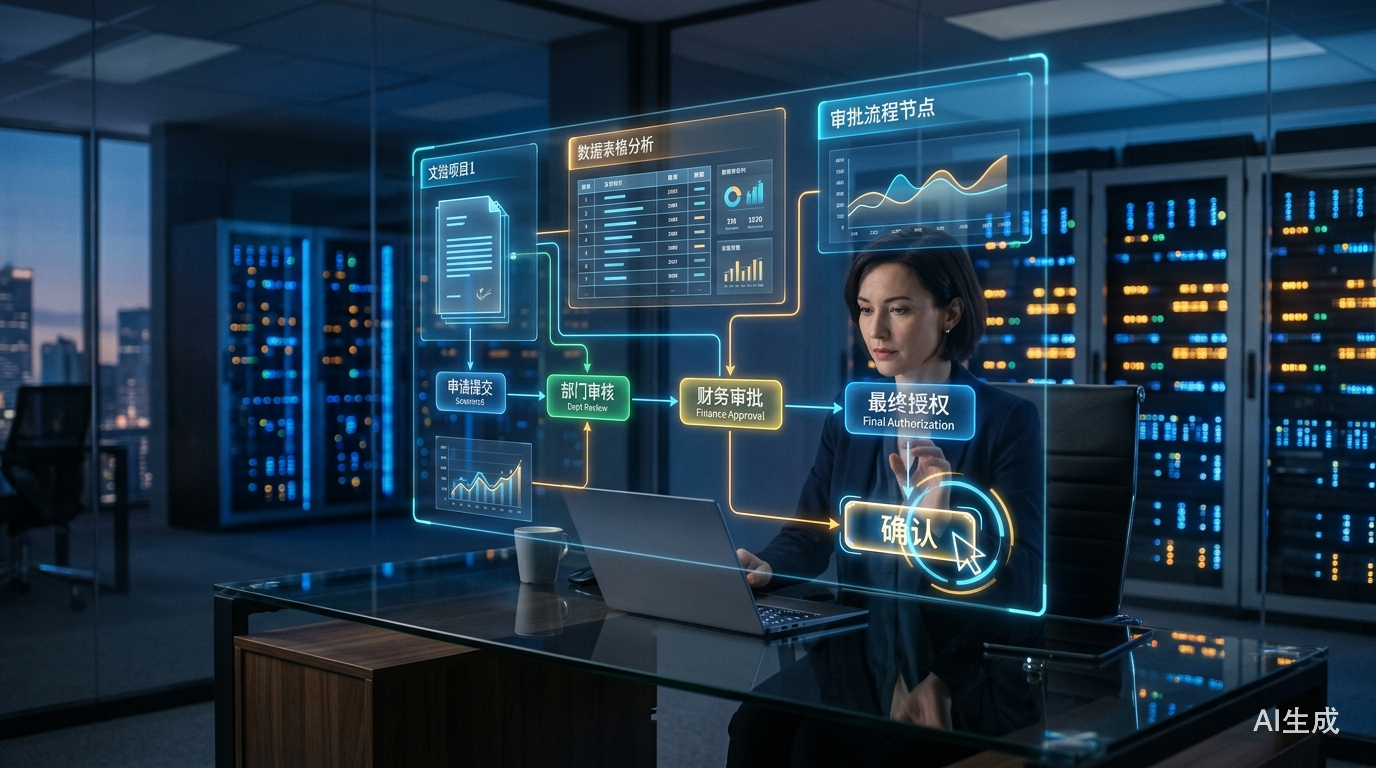
Recently, I've tried several domestic smart office products, and my most distinct impression is not how much smarter they've become, but rather that they've started to "reach out".
In the past, you would ask one question and AI would respond with one answer. Now, it needs to read local files, scan group chats, modify spreadsheets, and even submit tasks on your behalf.
Even when I arrive at the authorization page, my hand still hesitates for a moment. Allowing AI to make PPTs is one thing, but giving it access to the client list, financial data, and approval processes is another matter altogether.
So I am increasingly convinced that the real competition in smart offices is no longer about who can chat better, but about who can make enterprises feel secure enough to hand over context, permissions, and responsibilities.
The Real Changes Happening in the Office
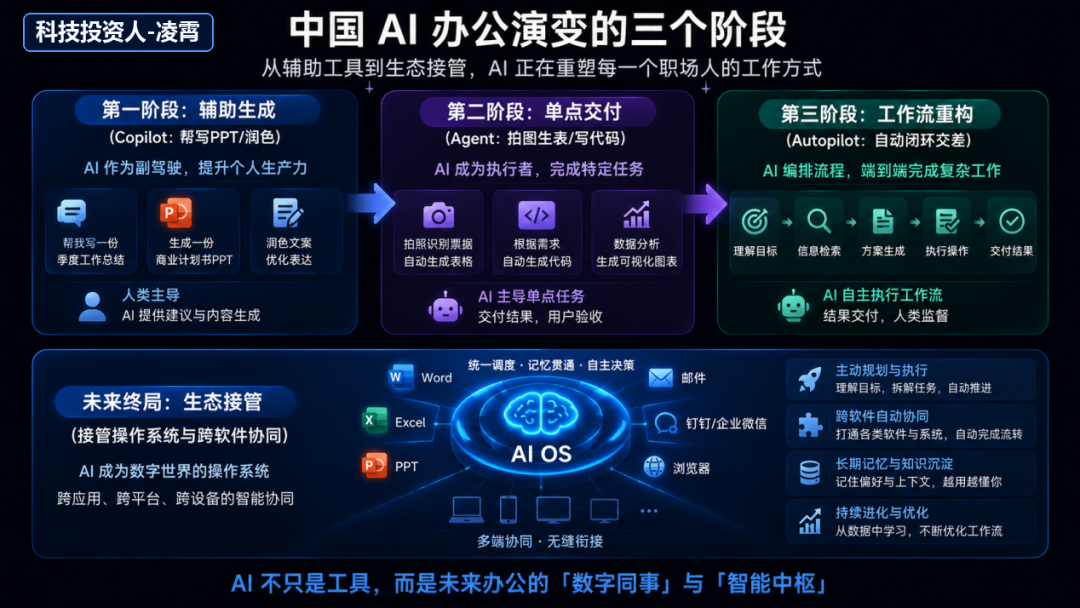
This year, "raising lobsters" became popular, and many people directly felt the difference between intelligent bodies and chatbots for the first time. The so-called "lobsters" refer to intelligent bodies like OpenClaw that can call tools and continuously execute tasks.
Tencent's WorkBuddy, Feishu's DouBao Work Partner and OpenClaw solution, and Alibaba's Qianwen Office all share the same direction: shifting from providing suggestions to directly delivering results.
In the past, AI helped you write meeting summaries; now it needs to update project schedules, remind those in charge, and then write the results back into the system. Without these steps, it's just a smarter input method; completing these steps is what makes it possible to become a digital colleague.
Three Major Tech Firms
Holding Three Different Cards
What is most valuable to Tencent is not WorkBuddy itself, but the connection rights it holds.
WeChat, WeCom, Tencent Meeting, Tencent Docs, Mini Programs, and payments are already dispersed across different aspects of work. What WorkBuddy aims to do is to enable AI to enter enterprises along these relationship chains.
Tencent is also putting its money where its mouth is, with capital expenditures reaching 52.8 billion yuan in the second quarter of 2026, a year-on-year increase of 176%. The funds are not all going towards offices, but the reasoning demand for WorkBuddy and CodeBuddy has been explicitly listed as one of the reasons for expanding AI infrastructure.
Bytedance's advantage lies in context.
Group chats, meetings, documents, tasks and bitables leave real traces of work in Feishu every day. Feishu is deploying OpenClaw and official plugins on one front, upgrading aily into a Doubao work partner on another, and using Miaoda to channel natural-language requests for building internal tools.
Alibaba's approach is more like a vertically integrated stack: the bottom layer consists of chips and Alibaba Cloud, the middle layer is the Qianwen model, and the top layer includes Qianwen Office and DingTalk. Alibaba's capital expenditures for the period reached 67.678 billion yuan, up 75% year-over-year, while revenue from AI cloud and computing power services grew 45% year-over-year.
Tencent is taking the connection, ByteDance is taking the context, and Alibaba is taking the full stack. On the surface, they are competing for the office entry point, but in essence, they are competing for who will be entrusted with a company's data, permissions, and budget in the future.
Money Can Buy Computing Power, Doubao Says
Yet Money Can't Buy Trust
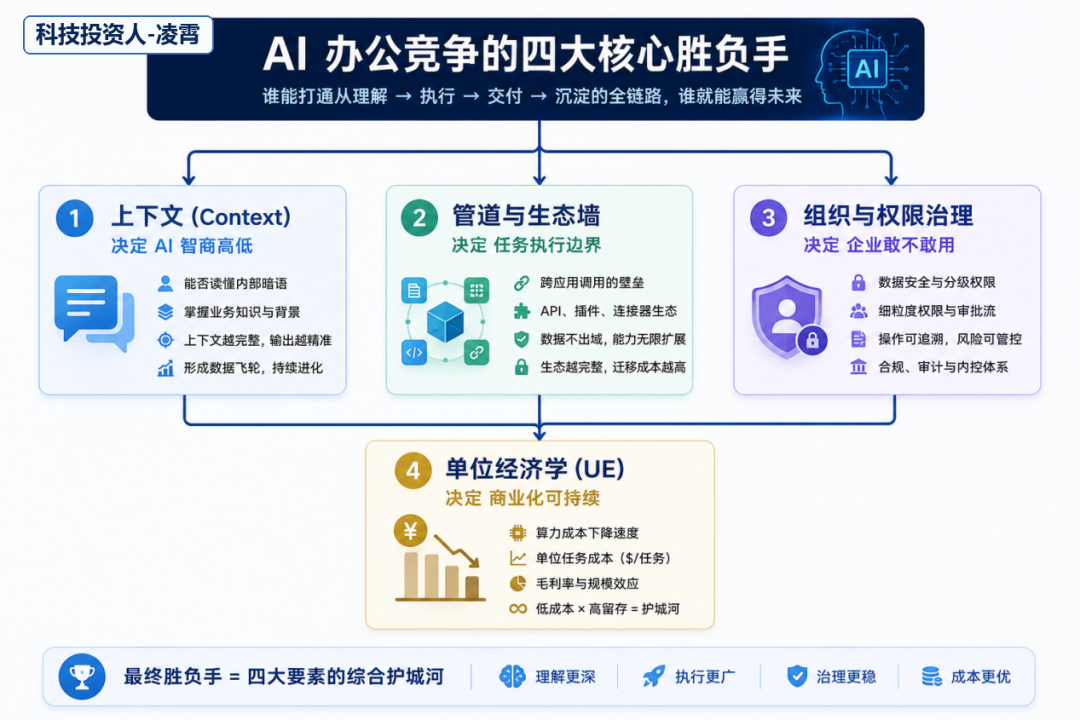
Smart offices must clear four final hurdles.
Firstly, context: Can AI distinguish which piece of data is the final version and understand what customers truly care about.
Second is the execution chain: drafting a plan and implementing it into the client's system, calendar, and approval process are two different products.
Third is governance: who views the data, who approves operations, and whether errors can be traced, will be considered in the procurement list earlier than model performance.
Fourth is unit economics: a task repeatedly calls models and tools, and costs quickly get out of control. In the end, what matters is the success rate, number of reworks, single-delivery cost, and paid conversion rate.
The giants' investment has validated the direction, but it hasn't completed the commercial proof for any product. The hardest part of office software has never been getting people to try it once—it's getting enterprises to renew their subscriptions in the second year and entrust even more critical workflows to it.
Major manufacturers gain entry point
Small Companies Still Have the Last Mile to Go
If startups still want to create another all-purpose assistant, the opportunities are indeed dwindling. PPT generation, meeting summaries, and spreadsheet processing will eventually become basic functions of large companies.
However, the truly valuable processes within enterprises are often not universal. Due diligence for legal matters, compliance for pharmaceuticals, industrial inspections, and cross-border taxation - each industry has its own dirty data, implicit rules, and boundaries of responsibility. Large factories can provide a foundation, but it's difficult for a single standard product to fully meet all their needs.
The gap for startups is not that their models are stronger than those of large factories, but rather that they better understand how a task is accepted, how responsibility is taken, and how repeat business is generated.
When looking at this type of company, I won't just focus on monthly active users. More worthwhile metrics to consider are the one-time completion rate of tasks, the frequency of repeated executions, the number of effective business systems accessed, the gross margin per delivery, and whether clients can expand from a single-person trial to an entire department.
Monthly active users only indicate that someone has visited, but deep engagement, low churn rates, and continuous renewals are what truly show that customers are reluctant to leave.
Model Determines Starting Point
Workflow Determines the Outcome
The ultimate goal of smart offices is not just adding another icon on the computer, but rather having a digital colleague that is authorized by the organization to take actions and can be held accountable when problems arise.
For professionals, what truly needs to be accumulated is not more prompt words, but rather credible data sources, reusable processes, and clear acceptance standards. Whoever can first convert experience into structure will be more likely to transition from being an executor to a commander of intelligence.
Rather than chasing the hottest office entry points, focus on the workflows that big tech's standardized capabilities fail to cover—that may be the true gap in the intelligent office era.
If I had to thoroughly outsource one task to AI, I would be most willing to hand over data analysis and processing. This is because AI can efficiently and accurately process large amounts of data, freeing up human resources for more strategic and creative work. However, there is one step that I absolutely dare not outsource to AI at present: decision-making that requires empathy, emotional intelligence, and complex moral judgments. While AI has made tremendous progress in recent years, it still lacks the emotional intelligence and nuanced understanding of human values that are essential for making decisions that involve complex ethical considerations.
Artificial Intelligence, AI Office, Intelligent Entity, Technology Investment, New Workplace Trends